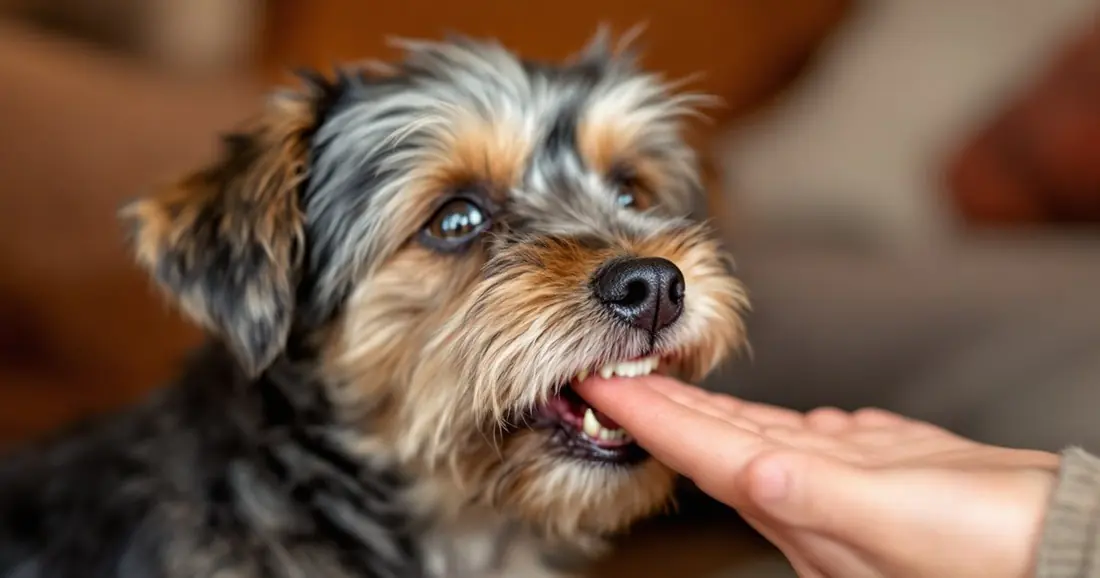
Why Does My Dog Nibble on Me? Cobbing, Mouthing, Biting
By Dog Translator · · 6 min read
When a relaxed dog gently nibbles your hand, arm or clothes with its small front teeth, it is usually showing affection or inviting play. Many owners call it 'cobbing', because it looks like the dog is eating corn off the cob. It is not aggression. AKC's trainers explain that dogs use their mouths the way people use their hands, to express feelings and start interactions. The useful skill is telling a nibble from puppy mouthing and from a real bite.
Nibble, mouthing or bite?
| Nibble ('cobbing') | Mouthing | Bite | |
|---|---|---|---|
| Teeth used | Front incisors, tiny quick nips | Whole mouth, including canines | Canines, with force |
| Pressure | Very light | Light to moderate | Hurts, may break skin |
| Body | Relaxed, often eyes half closed | Playful, wiggly, excited | Stiff, tense, often after warnings |
| Context | Cuddling, petting, calm moments | Play, excitement, puppies teething | Fear, pain, guarding |
| Normal? | Yes | Normal in puppies, should be shaped | No, needs professional help |
Why dogs nibble
Affection and grooming
Dogs nibble each other's necks, ears and backs during calm social moments, and the gentle front-teeth nibbling they do to people looks very similar. A dog that cobs your arm while leaning into you on the couch is including you in that kind of social contact. It is close cousin to licking and sitting on you.
Expressing feelings
AKC quotes trainer Kate Naito: people use their hands to express emotion, through hugging and clapping, and dogs use their mouths. An excited greeting, a happy moment or a burst of affection can come out as a nibble.
Starting play
According to Naito, play nips are not meant to hurt; they say the dog wants a play session, not a cuddle. AKC's chief veterinary officer, Dr. Jerry Klein, calls nipping a 'conversation starter' in puppies. You may notice it when you try to pet your dog calmly and the touch gets it excited instead.
Exploring and teething
Puppies explore the world with their mouths, and teething can last up to about six months, according to AKC. Nibbling hands and clothes during this stage is normal, and it is the best time to teach softer habits.
Breed tendencies
Klein notes that herding breeds, such as Corgis, Collies and German Shepherds, may nip more because they were bred to move livestock by nipping at heels. Naito adds that retrievers like the Labrador, bred to use their mouths, often seem extra mouthy too, and cautions against blaming breed alone.
Should you let your dog nibble you?
Gentle cobbing from an adult dog that never escalates is harmless, and many owners enjoy it. Two exceptions. If there are young children or visitors who may not understand it, teach the dog to keep its mouth off people, because a nibble that is fine on your arm can scare or scratch a child. And if your dog's nibbles get harder when it gets excited, treat it like mouthing and teach softer habits.
Teaching a softer mouth
- Stop the fun when teeth touch skin too hard. AKC's advice for puppies is to end the interaction: go still, withdraw your hand, or step away briefly.
- Redirect to a toy. Offer a chew or tug toy so the dog has something legal to mouth.
- Reward calm. Pet and praise when your dog is relaxed and mouth-free, so calm is what earns attention.
- Avoid rough hand games. Wrestling with your hands teaches that hands are toys.
- Meet the dog's needs. Tired, bored or teething dogs mouth more. Exercise, chew toys and rest all help; AKC stresses that over-tired puppies get bitier.
- Teach children to stand still and fold their arms if a puppy mouths them, rather than running and squealing, which makes it a game.
When it is not a nibble
A dog that bites with its canines, stiffens before using its mouth, or uses its teeth after growling or showing whale eye is not cobbing. That is a warning or a defensive bite, and it needs a different approach: give the dog space, figure out the trigger, and talk to a certified trainer or veterinary behaviorist. A dog that suddenly starts using its mouth when touched in one spot may be in pain; see your vet.
Nibbling clothes and blankets
Some dogs cob blankets, pillows or a favorite sweatshirt instead of people, often while settling down. It looks a lot like self-soothing. It is usually harmless if the dog is not swallowing fabric. If the dog chews holes and eats the pieces, swap the blanket for a durable chew and mention it to your vet, since swallowed fabric can cause blockages.
The evening nibbles
Many owners notice nibbling and mouthing peak in the evening, especially with puppies and young dogs. Tiredness plays a big part. AKC emphasizes rest for puppies, because over-tired puppies tend to get more bitey, not less. If the nibbles ramp up at the same time every evening, try a calm chew session and an earlier nap instead of more play.
Adolescent dogs
Between roughly six months and two years, many dogs go through an adolescent phase where earlier training seems to slip, and mouthiness can come back with it. Stay consistent: keep redirecting to toys, keep rewarding calm, and keep up exercise and mental work. It usually settles as the dog matures.
What to do when your dog nibbles during petting
- •If it is gentle and you enjoy it, there is no need to stop it.
- •If it is getting harder, slow your petting down. Fast, energetic petting can tip a calm dog into play mode.
- •Pause and see what the dog does. A dog that settles was just enjoying the moment.
- •Offer a chew if the dog clearly wants something to mouth.
Nibbling other dogs
Dogs that are friends often nibble each other's necks, faces and legs during calm moments or play. It is normal social behavior. Watch the receiving dog: if it relaxes or nibbles back, both are fine. If it turns away, freezes or lifts a lip, call your dog away, because the nibbling has turned into pestering. Puppies in particular need adult dogs or you to set limits on how much mouthing is acceptable.
Breeds that cob
Nibbling shows up in every kind of dog. Herding breeds like the Border Collie and Corgi often nip in excitement, retrievers mouth gently, and small terriers like the Yorkshire Terrier can be enthusiastic little cobbers when they are happy. What matters is pressure, body language and context, not the breed.
To sum up: gentle front-teeth nibbling is a friendly, social behavior in most dogs, especially when they are relaxed and close to you. Puppy mouthing is normal but should be shaped into softer habits. Hard, tense or defensive use of teeth is different and deserves professional advice. Read the pressure, the body and the moment, and you will know which one you are dealing with. And if you are ever unsure, a short session with a certified trainer who uses reward-based methods is a quick way to get a second opinion.
Frequently asked questions
Why does my dog nibble me with his front teeth?
Gentle front-teeth nibbling, often called cobbing, is usually affection or a play invitation. It resembles the social grooming dogs do with each other.
Is it bad if my dog nibbles on me?
Gentle nibbling that never escalates is generally harmless. Teach softer habits if nibbles get harder with excitement, and keep the dog's mouth off children and visitors.
How is nibbling different from biting?
Nibbling uses the front teeth with very light pressure and a relaxed body. Biting uses the canines with force, often from a stiff, tense dog after warnings like growling.
How do I stop my puppy from nibbling?
End the interaction briefly when teeth touch skin, redirect to a toy, reward calm behavior and make sure the puppy gets enough exercise, chew items and rest, as AKC recommends.