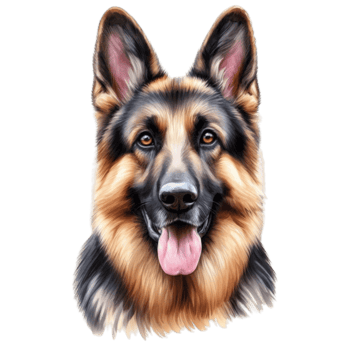
🐕🦺 German Shepherd Sounds
A confident, protective voice with a deep, purposeful bark.
Bred for herding and protection work, the German Shepherd is one of the most communicative working breeds. Their vocalizations are purposeful, a Shepherd rarely barks for no reason, so it pays to learn the difference between their alert, demand and guarding sounds.

German Shepherd sound chart
| Sound | What it means |
|---|---|
| A few sharp woofs | Alert: 'something changed.' |
| Low sustained barking | Guarding, warning an intruder to keep distance. |
| Rolling grumble (relaxed) | Play or affection, not a growl. |
| Persistent whining | Asking for a job or mental stimulation. |
Alert vs. guarding bark
A few sharp 'woofs' is an alert, 'something changed'. A lower, sustained, repetitive bark is guarding behavior, telling an intruder to keep their distance. Tone and rhythm tell you which is which.
The Shepherd 'grumble'
A soft rolling grumble (not a growl) is often play or affection. Context matters: relaxed body and wagging tail = friendly chatter.
Whining for a job
Shepherds are working dogs. Persistent whining frequently means mental under-stimulation, they're asking for a task, not just attention.
German Shepherd sounds: frequently asked questions
Do German Shepherds bark a lot?
They're moderately vocal but purposeful, a Shepherd rarely barks for nothing. Constant barking usually signals under-stimulation or insufficient training, not the breed itself.
How do I tell an alert bark from a guarding bark?
Tone and rhythm. A few high, sharp woofs is an alert. A low, sustained, repetitive bark with stiff body language is guarding.
Why does my German Shepherd whine so much?
Shepherds are working dogs. Persistent whining most often means mental under-stimulation, they're asking for a task, not just attention.
Are German Shepherds good guard dogs?
Yes, among the best. Their deep, authoritative bark and protective instinct make them natural guardians, though proper socialization is essential.