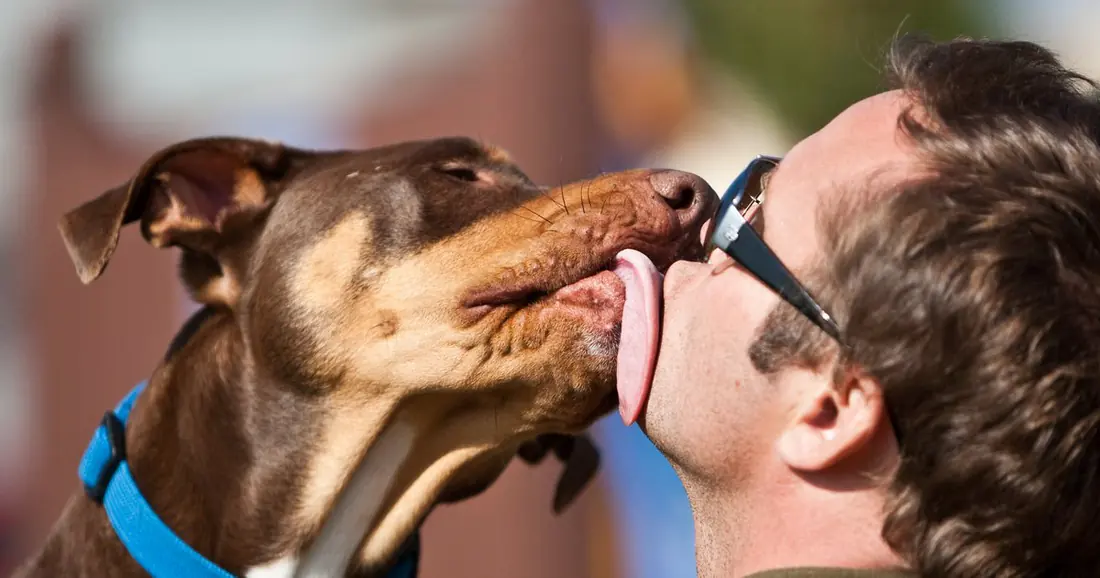
Why Does My Dog Lick Me? Read It by Where It Licks
By Dog Translator · · 6 min read
Dogs lick people for four reasons: it started as a puppy food request, it became a greeting, your skin tastes salty, and it calms them down. Which one you are getting depends mostly on where the lick lands and when. That is more useful than asking whether it is 'kisses', because the honest answer from researchers is that sometimes it is and sometimes it is not.
Where it licks and what it usually means
| Where | When | Most likely reason |
|---|---|---|
| Your face | When you come home, when you lean down | Greeting ritual that grew out of puppy food begging |
| Your mouth area | Right after you ate | Food smells. Horowitz notes face licking often follows meals |
| Hands and arms | After exercise, after cooking, lotion | Salt and interesting tastes |
| Feet and legs | After a walk or shower | Salt, scent and easy access |
| Your face, while you are upset | Crying, arguing, a tense moment | Appeasement: trying to calm things down |
| Its own lips, quickly | When scolded, stared at, handled | A stress signal, not affection |
| Anything, nonstop | Hours a day, hard to interrupt | Anxiety, boredom or a medical issue |
Where licking comes from
AKC quotes Dr. Alexandra Horowitz, who runs the Dog Cognition Lab at Barnard College: wild canid puppies lick the face and muzzle of their mother when she returns from a hunt, which prompts her to regurgitate food for them. Your dog is not asking you to throw up lunch. But the behavior survived domestication and turned into something else. Horowitz points out that licking has become a ritualized greeting for many dogs, and some wild members of the dog family lick pack mates just to welcome them back.
So the welcome-home face wash is real affection in the sense that matters: it is a social greeting aimed at you. It is just not a human kiss with a human meaning attached.
Salt, lotion and the taste explanation
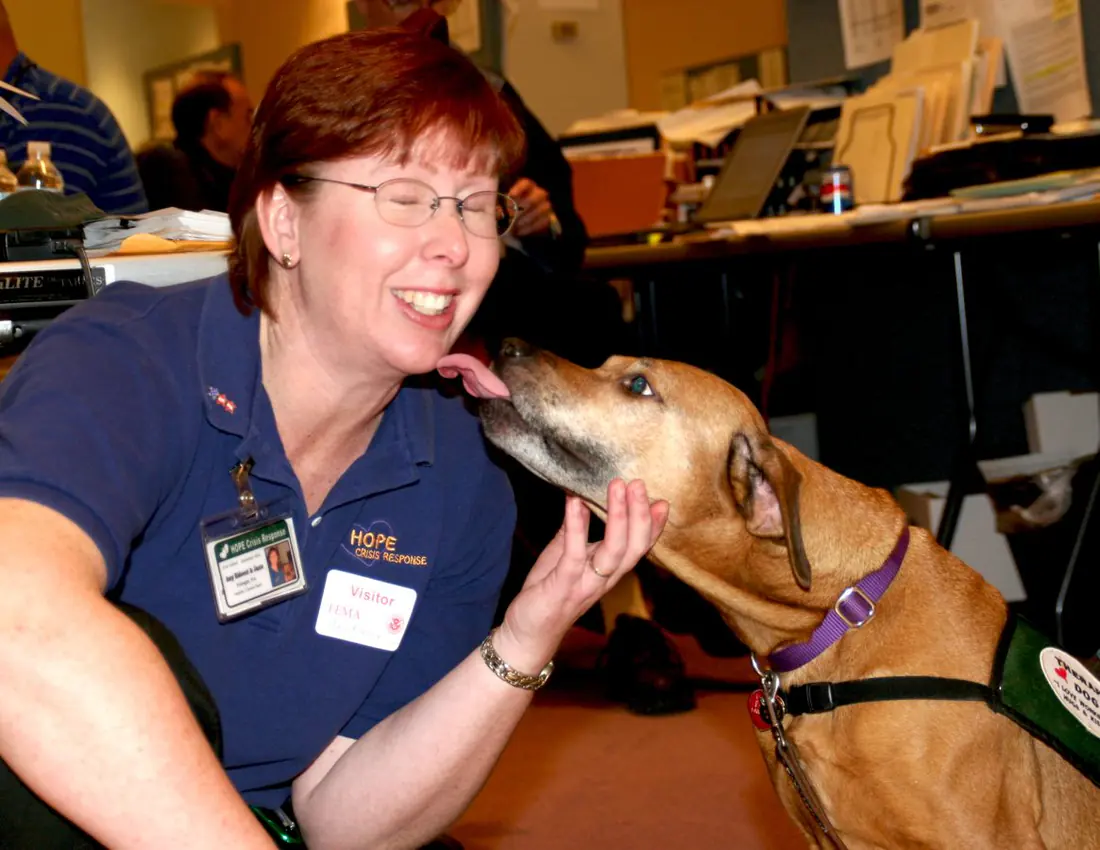
Certified applied animal behaviorist Dr. Mary Burch, quoted by AKC, puts it bluntly: human skin is slightly salty, especially after exercise. A dog that goes straight for your legs after a run or your hands after you cooked is tasting, not bonding. Lotions and sunscreen add more flavor. That is also why so many dogs lick feet: they smell strongly and they are right at dog level.
Licking to calm things down
Many owners notice their dog licks their face more when they are crying or stressed. Burch notes licking can give a dog a feeling of security and comfort, like being licked by its mother in the litter. It also works as appeasement: a way to defuse tension. A dog that licks you while its body is low, ears back and tail tucked is not celebrating. It is trying to make the mood go away.
There is a related signal that owners often miss: the dog licking its own lips. In a 2018 study in Behavioural Processes, dogs were shown pairs of human and dog faces with happy or angry expressions. They licked their mouths more when looking at the angry faces, and more toward human faces than dog faces. The sound playing at the same time made no difference. A quick tongue flick when you raise your voice or loom over your dog is that same signal. Our guide to whale eye covers the other stress signals that come with it.
Is it a dominance thing?
No. Burch says there is no need to worry that licking is a form of domination, and that if anything it points the other way: one theory is that licking is a sign of deference toward a higher-status pack member. Either way, you do not need to 'correct' a dog for licking you to keep your place in some hierarchy.
The hygiene rule
The old idea that a dog's mouth is cleaner than a human's is false. AKC, citing Cornell veterinarian Dr. Leni Kaplan, recommends not letting dogs lick your mouth, nose or eyes, because some bacteria and parasites can pass through those membranes. A lick on intact skin is unlikely to cause problems for a healthy person. Keep regular parasite checks up to date and keep the dog away from feces, which is the main source of the risky stuff. People with weak immune systems, babies and anyone with an open wound should be more careful.
When licking becomes a problem
Most licking is harmless. AKC flags excessive licking, of you, objects or itself, to the point that it looks self-stimulating, as a possible sign of anxiety, boredom or pain. Obsessive licking of its own paws or body can point to allergies or other health problems. The order of operations matters:
- Vet first if the dog licks itself constantly, has red or stained fur from licking, or the habit started suddenly.
- Check the day. A dog that gets little exercise or mental work fills the gap with whatever is available, including you.
- Then work on the behavior.
How to dial it down without hurting the bond
Pushing the dog away, yelling or tapping its nose turns licking into a game or a source of stress. The approach Burch recommends is redirection: give the dog something to do that is incompatible with licking.
- •Ask for a sit the moment the licking starts, then reward the sit. Many dogs stop licking on their own once they are sitting.
- •Hand over a food puzzle or a lick mat with a smear of plain yogurt or dog-safe peanut butter. It gives the urge somewhere to go.
- •Stand up and step back calmly when licking starts during greetings, then greet the dog once all four paws are on the floor and the tongue is in.
- •Teach a trick that uses the same energy: a 'hug', a spin, a 'speak' on cue.
- •Wash off lotion or sweat if the dog targets your skin after exercise.
Licking other dogs
Dogs lick each other for the same family of reasons. A younger or less confident dog licking an older dog's muzzle is a polite, appeasing greeting that goes back to the same puppy behavior. Mothers lick puppies to clean them and to stimulate them. Friends lick each other's faces and ears during calm moments. Watch the receiving dog: if it turns away, stiffens or lifts a lip, the licking has turned into pestering and it is time to call your dog away.
Breeds and licking
Licking is not a breed trait in any formal sense, but people-focused breeds tend to do it more because they seek contact more. Labradors and Golden Retrievers are famous face-washers. Flat-faced breeds like the Pug lick less precisely but just as enthusiastically. What matters is your dog's normal. A dog that never licked and starts doing it constantly, or a licker that suddenly stops, is telling you something changed.
If you want the bigger picture of what your dog's affection looks like when measured, read signs your dog loves you, ranked by the evidence, where licking sits in the weak column for a reason.
Frequently asked questions
Is my dog licking me a sign of affection?
Often, yes. Licking began as a puppy food-begging behavior and became a ritualized greeting for many dogs. It can also be about salty skin, appeasement or stress, so look at the timing and the dog's body.
Why does my dog lick my face when I cry?
Licking can be a calming, appeasing behavior. Dogs respond to emotional changes in people, and a dog that licks you while you are upset is likely reacting to the tension, trying to settle the situation.
Is it safe to let my dog lick my face?
AKC, citing a Cornell veterinarian, advises not letting dogs lick your mouth, nose or eyes. A lick on intact skin is unlikely to harm a healthy person.
How do I stop my dog from licking me so much?
Redirect rather than punish. Ask for a sit and reward it, offer a lick mat or food puzzle, and greet the dog only when it is calm. Rule out medical causes if the licking is constant.