Why Do Dogs Like Squeaky Toys? The Prey Sound Explained
By Dog Translator · · 6 min read
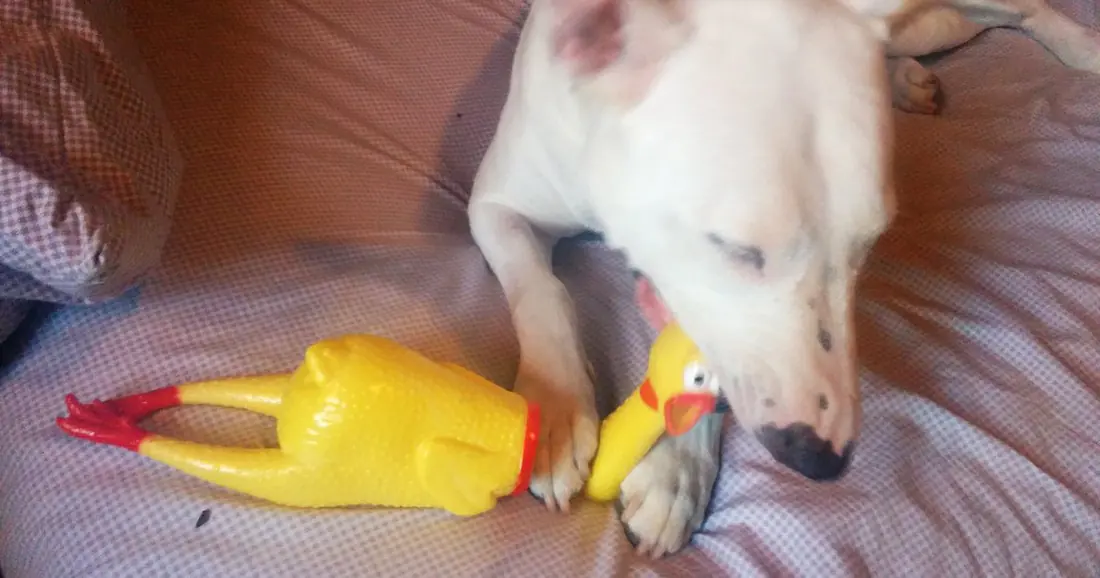
Dogs like squeaky toys because the squeak sounds like small prey. AKC puts it plainly: most dogs like toys that simulate prey, which is why squeaky and soft toys are so popular, and hearing a high-pitched squeak or ripping a plush toy apart can be deeply satisfying. The second part of the answer is novelty. Research on toy play shows dogs lose interest in a toy surprisingly fast, and a new one switches the excitement right back on.
What the squeak does
| Toy feature | What it imitates | Why dogs care |
|---|---|---|
| High-pitched squeak | The cry of a small animal | Rewards biting with an instant response |
| Soft, plush body | Fur and flesh | Satisfying to shake, carry and tear |
| Stuffing | Insides of prey | 'Dissecting' the toy completes the sequence |
| Movement when thrown | A fleeing animal | Triggers chasing |
| New smell and look | A new find | Novelty drives most toy interest |
The prey sequence
Hunting in wild canids follows a sequence: search, stalk, chase, grab, shake, kill, dissect, eat. Dogs have kept parts of it to very different degrees depending on breed. A squeaky toy lets a dog play out the grab-and-shake part, with the squeak acting as feedback. That is why many dogs bite rhythmically to keep the toy squeaking, then go quiet and focused once they find the squeaker and start trying to remove it. AKC notes that some dogs prefer toys that feel good to chew, others prefer balls they can chase, and some do not care about toys unless their owner joins in.
Why your dog gets bored of the toy you just bought
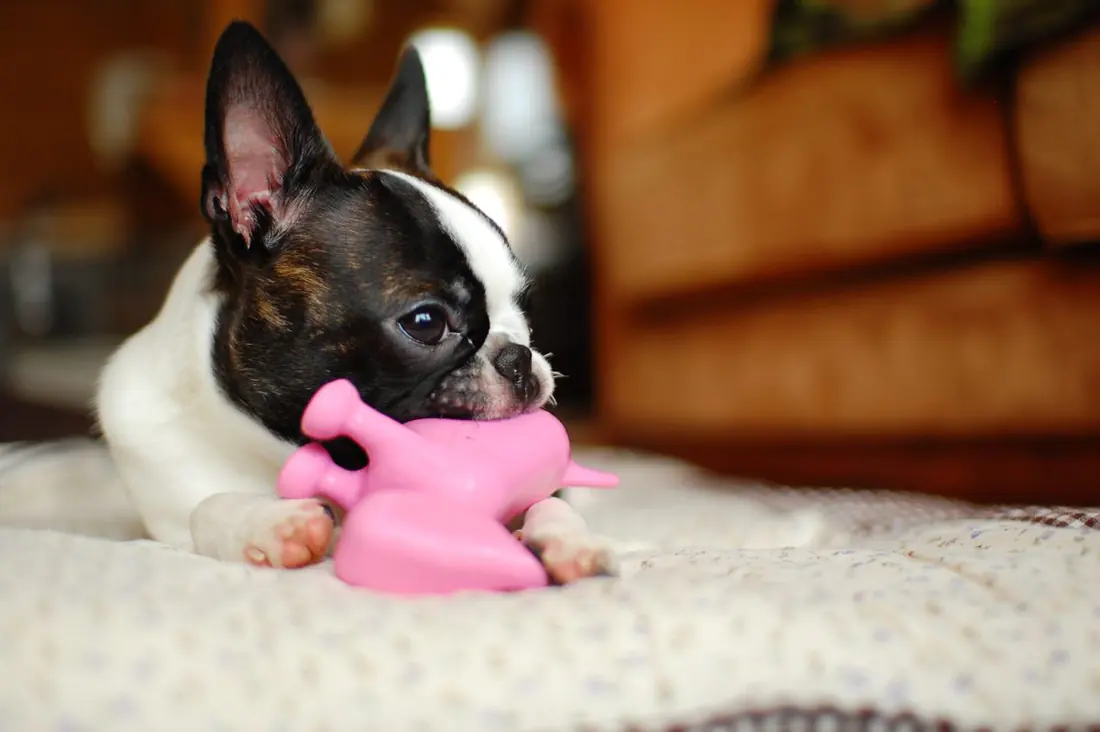
Researchers at the University of Bristol tested this with 16 Labrador Retrievers in kennels. Each dog was given the same toy over and over in 30-second periods until it stopped playing. Interest dropped quickly. When the researchers then offered a different toy, play came back. The type of change, color, smell or both, did not matter much; what mattered was that the toy was different. They concluded that dogs lose interest because they get used to the toy as a whole.
The practical lesson: rotate. Keep most toys out of sight, put out two or three at a time, and swap them every few days. Old toys become new again. You will need to buy fewer of them.
Do squeaky toys make dogs aggressive?
No. Playing out prey behaviors with a toy is not the same as aggression toward people or other dogs. What squeaky toys can do is get some dogs very aroused, and a few dogs guard their favorite toys. If your dog freezes, growls or stiffens when someone approaches its toy, treat it as resource guarding: trade the toy for a treat rather than grabbing it, and read why dogs growl for how to handle it.
Safety rules
- •Supervise soft and squeaky toys. AKC warns that swallowing a squeaker or toy parts can cause serious problems that may need surgery.
- •Take the toy away once it is torn open. A dog that has found the squeaker will work hard to get it out.
- •Make some toys 'play with me' only, as AKC suggests: used during tug or fetch with you, then put away.
- •Match the toy to the dog. Big, strong chewers need sturdier toys; puppies like rubbery chew toys while teething; senior dogs often prefer softer toys.
- •Trade, do not grab. If you need the toy back, swap it for a treat or another toy.
Why some dogs ignore squeaky toys
AKC notes that dogs are individuals and preferences change over life. Some dogs just do not have much interest in toys. Calm dogs often respond better if you drag a soft toy along the ground just out of reach, imitating prey, than if you push it in their face. Let quieter dogs win at tug sometimes so the game stays fun. And introduce toys while dogs are young; puppies are naturally more playful.
Is the squeak annoying your dog's ears?
Dogs hear higher frequencies than people do, so a squeak is clearly audible to them. There is no evidence that normal squeaky toys hurt dogs' hearing. If a dog seems startled or avoids a particular toy, swap it for a quieter one, or try toys with crinkle material instead of a squeaker.
How to choose a squeaky toy
| Dog | Good choice | Avoid |
|---|---|---|
| Strong chewer | Thick rubber toys with a recessed squeaker | Thin plush toys with loose squeakers |
| Gentle carrier | Soft plush squeaky toys | Very hard toys it ignores |
| Puppy | Small, soft rubber toys sized for its mouth | Toys small enough to swallow |
| Senior | Soft, easy-to-hold toys | Heavy or very hard toys |
| Noise-sensitive dog | Crinkle toys or very soft squeakers | Loud, high-pitched squeakers |
Should you let your dog 'kill' the toy?
Ripping a toy apart is a normal part of prey play, and for some dogs it is the best part. It is fine under supervision, with two conditions: take the squeaker and stuffing away before they are swallowed, and replace the toy once it is in pieces. If your dog destroys every toy in minutes, choose sturdier ones and save plush toys for supervised sessions.
A simple rotation plan
Keep all toys in a box. Put out three: one to chew, one to squeak, one to carry. Every three or four days, swap them for three different ones. Keep a couple of 'special' toys only for games with you. Following the habituation research, you get more play out of the same toys and fewer new purchases.
Squeaky toys as training rewards
For toy-motivated dogs, a quick squeak can be a powerful reward, sometimes more exciting than food. Use a favorite squeaky toy that only comes out for training, give a few seconds of play after a good response, then put it away again. Keeping the toy special preserves its value, which fits what the habituation research shows about novelty.
Breeds and toy play
Terriers were bred to hunt small animals, and many, including the Yorkshire Terrier, go straight for the squeaker. Retrievers like the Golden Retriever tend to carry toys around gently and bring them to people. Herding dogs like the Border Collie often prefer balls and chase games over shaking toys. Scent hounds like the Beagle can take or leave toys and would rather follow a smell. If your dog spends its toy energy on its own tail instead, see why dogs chase their tails.
In short, the squeak is a sound designed, by accident, to press all the right buttons in a predator's brain. Use it to your advantage: rotate toys so they stay new, play with your dog instead of only leaving toys on the floor, supervise the destruction, and save a special squeaky toy for training. Your dog gets a better outlet for its instincts, and you get a dog that is easier to motivate.
Frequently asked questions
Why do dogs love squeaky toys?
The squeak sounds like small prey, and squeaky, soft toys let dogs play out grabbing and shaking. AKC notes most dogs prefer toys that simulate prey.
Why does my dog lose interest in new toys so fast?
Research with Labrador Retrievers found dogs quickly get used to a toy and stop playing, but a different toy restores interest. Rotating toys keeps them interesting.
Do squeaky toys make dogs aggressive?
No. Prey-style play with toys is not aggression. Some dogs guard favorite toys, which should be handled by trading rather than grabbing.
Are squeaky toys safe for dogs?
With supervision. AKC warns that swallowed squeakers or toy pieces can require surgery, so remove toys once they are torn open.