Why Do Dogs Chase Their Tails? Fun, Itch or Compulsion
By Dog Translator · · 6 min read
Most dogs chase their tails because it is fun, they are bored, or it gets a reaction. Puppies do it while discovering that the thing behind them is attached. AKC's chief veterinarian lists play and attention-seeking as the usual causes. Less often, tail chasing points to something physical, like fleas or full anal glands, and in some dogs it becomes a compulsive behavior that needs professional help. The difference is in how often, how intense and how easy it is to interrupt.
Harmless or a problem?
| Sign | Usually harmless | Worth a closer look |
|---|---|---|
| Age | Puppy or young dog | Starts or worsens in adulthood or old age |
| Frequency | Now and then, in short bursts | Daily, many times, for long periods |
| Interruptible | Stops when called or offered a toy | Hard to interrupt, seems 'zoned out' |
| Mood | Playful, loose body | Tense, frantic or distressed |
| Damage | None | Bitten, hairless or bleeding tail |
| Other behaviors | Normal otherwise | Light or shadow chasing, other repetitive habits |
The everyday reasons
Boredom and energy
A dog with energy to burn and nothing to do will invent a game, and its own tail is always available. AKC recommends more walks and puzzle games that make the dog think. If tail chasing drops when exercise goes up, you have your answer.
Attention
AKC's Dr. Jerry Klein points out that for some dogs, even an owner saying 'stop that' is enough reward. If your dog spins every time you laugh or film it, it has learned a trick. Ignore the spinning and reward calm behavior instead.
Puppy curiosity
In puppies, tail chasing is often self-discovery: exploring that thing hanging behind them. Klein says it usually decreases or stops with age, and that if it becomes more frequent or severe over a short period, a vet should be consulted.
The physical reasons
- •Fleas. AKC notes fleas often bite near the base of the tail, so the dog may be chasing the itch, not the tail.
- •Anal glands. Full or impacted anal glands cause discomfort near the tail, often with scooting or a fishy smell.
- •Skin problems or an injury on the tail itself.
- •Cognitive decline. In older dogs, AKC lists canine cognitive dysfunction among the possible causes, with signs like disorientation and changed sleep patterns.
- •Neurological issues. AKC also mentions seizure-like activity, which a vet can assess.
When tail chasing becomes compulsive
Compulsive tail chasing is studied as a model for obsessive-compulsive disorder. In a 2012 study in PLOS ONE, Finnish researchers surveyed owners of 368 dogs from four breeds. Several findings stand out:
- •Tail chasing typically started early, at three to six months of age.
- •Severity varied a lot, with mild cases more common than severe ones.
- •Almost half of the tail chasers were less responsive during bouts, and they showed other compulsive behaviors more often.
- •Dogs that received dietary supplements, especially vitamins and minerals, chased their tails less.
- •Neutered females chased their tails less, suggesting hormones play a role.
- •Tail chasers were shyer and had been separated from their mothers earlier than other dogs.
These are associations from a survey, not proof of cause, but they point in a consistent direction: environment, early life and possibly nutrition influence the behavior, not just genes.
Breeds more prone to it
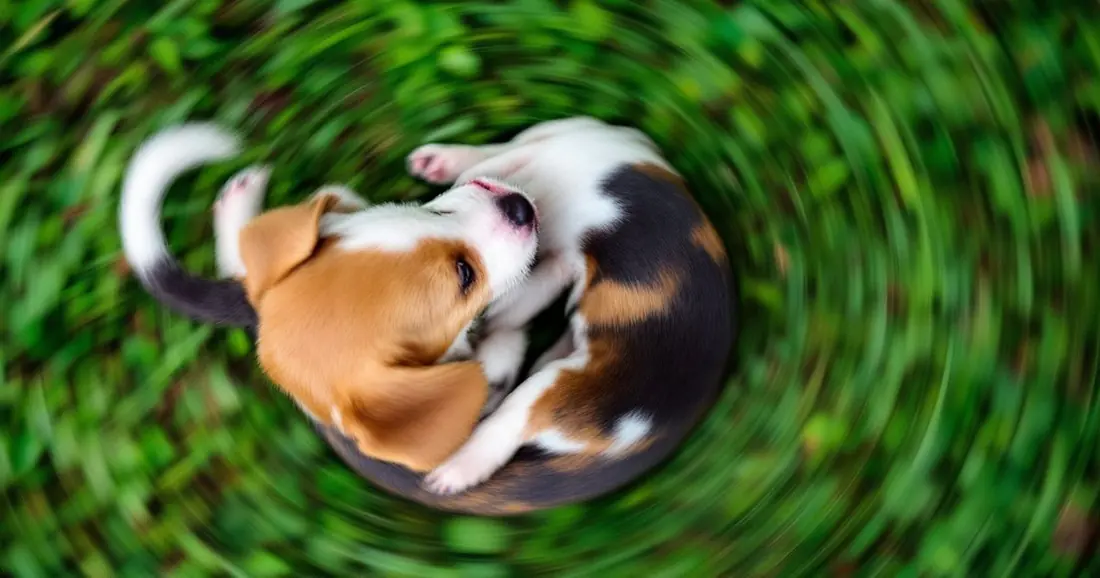
AKC names Bull Terriers and some other terrier types as more prone to tail chasing, along with German Shepherds, Doberman Pinschers and Shiba Inus. AKC also mentions research suggesting some breeds are more likely to tail-chase in response to stress. High-energy working dogs like the Border Collie can develop spinning and chasing habits when under-exercised. A playful Beagle puppy spinning in the yard is usually just a puppy.
What to do
- Check for fleas, look at the tail for wounds, and watch for scooting.
- Increase exercise and mental work: longer walks, sniffing, puzzle feeders, training games or a dog sport.
- Stop rewarding the spin with laughter or attention. Redirect calmly to a toy or a cue, then reward.
- Film it if it is frequent. A video helps your vet judge intensity and responsiveness.
- See your vet if it is frequent, hard to interrupt, damaging the tail or new in an adult or senior dog. AKC says a vet may refer you to a certified trainer, behaviorist or even a neurologist, and medication can help alongside behavior work in compulsive cases.
What not to do
Do not punish tail chasing. If it is play, punishment spoils the fun without fixing the boredom. If it is compulsive, stress tends to make compulsions worse, and the Finnish study linked tail chasing with shyness. Do not keep filming and laughing at a dog that spins constantly either; that is how a quirk becomes a habit. For a dog whose energy needs an outlet, a few minutes of toy play can do more than any correction, and our guide to squeaky toys has tips on keeping toys interesting.
The viral video problem
Tail-chasing videos are popular online, and many of them show dogs spinning frantically for long periods. Some of those dogs are playing. Others show the signs that worry vets: long bouts, a glazed look, no response to their name and damage to the tail. Filming and laughing is how many owners unknowingly reward the behavior. If your dog spins every time the phone comes out, put the phone away and redirect instead.
Enrichment that helps
- •Sniff walks where the dog sets the pace and gets to investigate.
- •Food puzzles and scatter feeding instead of a bowl.
- •Short training sessions, five minutes a few times a day.
- •Fetch, tug or flirt-pole games to burn energy in a structured way.
- •Dog sports such as agility, nose work or herding for high-drive breeds.
A rule of thumb many vets use: if you can call your dog out of a spin with its name or a toy, and it stays out, it is probably play. If it goes straight back to spinning, or does not seem to hear you, it is time to ask for help.
Tail chasing and anxiety
Some dogs spin when they are frustrated or anxious: when a visitor arrives, when they are left behind a gate, or when they are kept waiting for a walk. In those dogs, the spinning tends to show up at the same stressful moments every day. Working on the stress, with predictable routines, gradual exposure and more chances to burn energy, often reduces the spinning more than targeting the behavior itself. If your dog also struggles when left alone, the checklist in why dogs follow you everywhere helps separate clinginess from separation anxiety.
Most of the time, a dog chasing its tail is a dog with a bit of extra energy and a sense of humor. Give it more to do, stop applauding the spins, and check for fleas or sore spots near the tail. Save the worry for the frequent, frantic, hard-to-interrupt kind, and get professional help early if you see it, because compulsive behaviors are easier to treat before they become ingrained.
Frequently asked questions
Is it normal for dogs to chase their tails?
Occasional tail chasing is normal, especially in puppies, and usually comes from play, boredom or attention-seeking. Frequent, intense or hard-to-interrupt chasing deserves a vet visit.
Why does my dog suddenly chase its tail?
A sudden start can point to an itch from fleas, anal gland discomfort, a tail injury or, in seniors, cognitive changes. Check the tail and see your vet if it continues.
What breeds chase their tails the most?
AKC names Bull Terriers and other terrier types, German Shepherds, Doberman Pinschers and Shiba Inus as more prone to tail chasing.
How do I stop my dog from chasing its tail?
Rule out fleas and medical causes, increase exercise and mental stimulation, stop rewarding the behavior with attention and redirect to a toy. Compulsive cases may need a behaviorist and medication.