Why Do Dogs Howl? 6 Triggers and What Each Means
By Dog Translator · · 6 min read
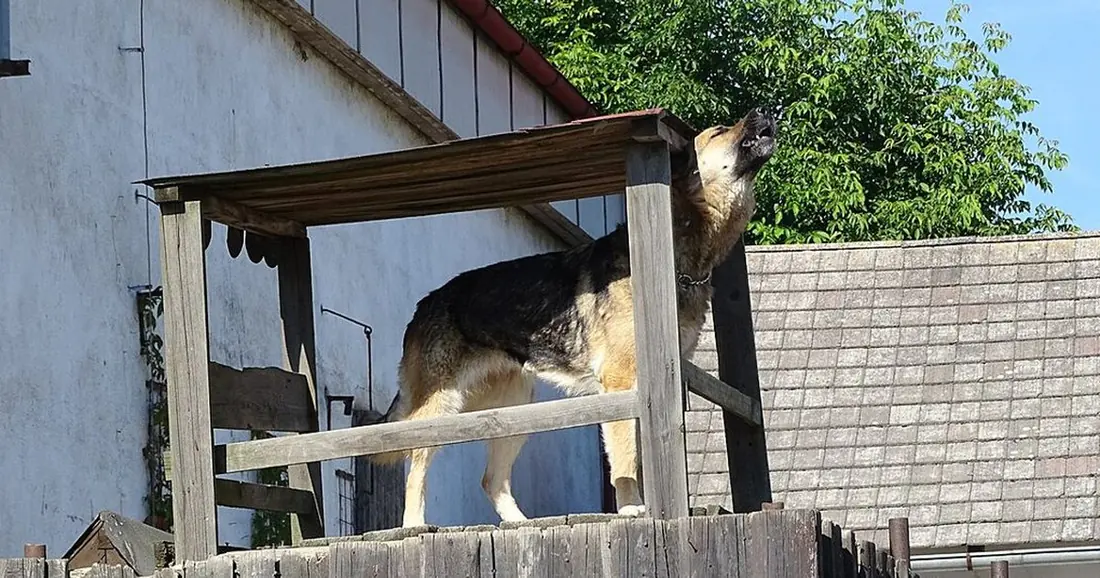
Dogs howl because a howl is a long-distance call. It carries much farther than a bark, and wolves use it to keep in touch with pack members they cannot see. Your dog inherited the hardware. What switches it on in a living room is one of six triggers, and they are easy to tell apart once you know what to look for.
| Trigger | What it sounds like | What it means | Do anything? |
|---|---|---|---|
| Sirens, music, other dogs howling | Starts seconds after the sound, stops when it stops | A response to a howl-like noise | No |
| You leaving the house | Starts as the door closes, repeats in waves | Distress at being alone | Yes, if it lasts |
| Wanting something | Short howls aimed at you, often with eye contact | Learned: howling gets results | Stop rewarding it |
| Something outside | Paired with alert barks, nose toward a window | Announcing 'I am here, this is mine' | Usually no |
| Pain or illness | New, at odd times, with other changes | Discomfort | Vet visit |
| Excitement | Mixed with yips and wiggling at greetings | Happy arousal | No |
1. Sirens and music: the classic
A fire truck goes by and your dog points its nose at the ceiling. This is the most common howl in cities and the least worrying. The siren is not hurting the dog's ears, and the howl is not a complaint. Nobody has proven exactly why sirens set dogs off. The most accepted explanation is that a rising and falling siren sits close to the pitch pattern of a real howl, so the dog answers it the way a wolf answers a distant pack.
Harmonicas, violins and a certain kind of singing do the same thing. If your dog howls along to one song and ignores the rest, that is the pitch talking, not musical taste.
2. Separation: the one that matters
Howling that starts when you leave and keeps going is the one to take seriously. AKC lists separation anxiety among the main causes, and the pattern is distinctive: it begins within minutes of the door closing, comes in waves, and often comes with chewing at doors, pacing or accidents. A neighbor telling you your dog howls all day is usually the first sign owners get, because the dog is quiet when they are home.
Record your dog for the first 30 minutes after you leave. A phone on a shelf is enough. If the howling stops after a minute or two and the dog settles, that is protest, not panic. If it escalates, you are looking at a separation problem, and our guide on dogs that follow you everywhere covers how to tell a clingy dog from an anxious one.
3. Attention: you trained it
A dog that howls at you, looks at you and gets a reaction has learned a trick. It does not matter whether the reaction is a treat, a laugh or 'stop that'. Any of them pays. The fix is boring: ignore the howl completely, then reward the dog the moment it goes quiet. Expect it to get worse for a few days before it gets better. That spike is the dog testing whether the old rule still works.
4. Territory and alerts
Some dogs howl at a passing dog, a delivery van or a noise only they heard. Paired with barking and a stiff stance at the window, it is an announcement. It is normal and mostly harmless. If it bothers you, block the view of the street rather than scolding the dog for doing what its ancestors were bred for.
5. Pain: the howl that is new
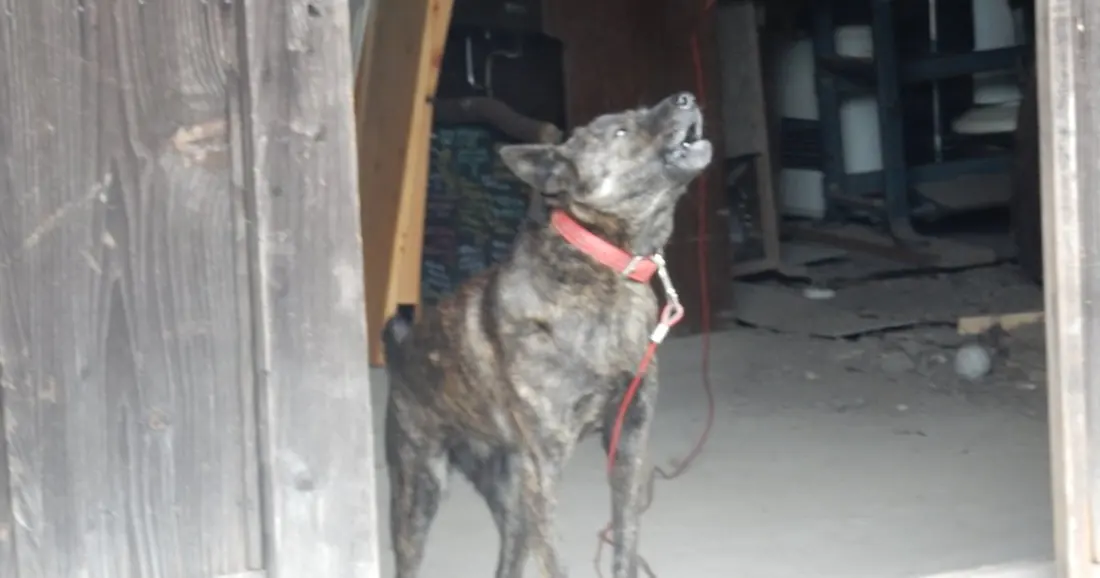
AKC is clear that an increase in vocalizing can point to an underlying health problem. The giveaway is change. A dog that never howled and suddenly starts, especially at night or when lying down, needs a vet before it needs a trainer. Senior dogs that howl or bark at night for no visible reason can also be showing early cognitive decline, which we cover in why dogs bark at night.
6. Excitement
Huskies in particular greet people with a mix of howls, yips and 'woo-woo' noises. There is nothing to decode beyond 'you are home'. The Husky sounds page has the full vocabulary of the breed.
Which breeds howl the most
Breed matters more than most owners expect. A 2023 study in Communications Biology played recorded wolf howls to 68 purebred family dogs. Breeds that are genetically closer to wolves, often called ancient breeds, were more likely to answer with howls. Modern breeds tended to bark instead. Age mattered too: older dogs from ancient breeds howled longer and showed more stress behaviors during the playback.
| Breed | Howl style | Why |
|---|---|---|
| Siberian Husky | Long, frequent, 'talking' howls | Ancient breed, bred to work in groups |
| Alaskan Malamute | Deep, drawn-out howl | Ancient breed close to the Husky |
| Basenji | Yodel-like howl, rarely barks | Ancient breed |
| Beagle | Baying: a howl broken into a bark | Scent hound bred to call to hunters |
| Basset Hound | Deep, mournful bay | Scent hound |
| Dachshund | Surprisingly loud howl for its size | Hunting dog bred to signal underground |
| Golden Retriever | Rare | Modern breed, little howling drive |
AKC names Siberian Huskies, Chow Chows and Basenjis as frequent howlers and Beagles and Black and Tan Coonhounds as bayers. Baying is the hunting version: a howl chopped into bursts so a hunter on foot can follow the dog.
Teaching a 'quiet' cue
If your dog howls on cue at every siren and you want an off switch, teach one. It takes a week of short sessions and works better than any scolding.
- Wait for a howl you can predict, or trigger one with a recording of a siren at low volume.
- As soon as the dog pauses for breath, say 'quiet' once in a normal voice and hold a treat near its nose. A dog cannot sniff and howl at the same time.
- Give the treat after one or two seconds of silence. Build up to five, then ten seconds.
- Once it works at home, try it with real sirens. Expect it to fail the first few times when the trigger is strong.
Keep the sessions under five minutes. The point is not a silent dog. It is a dog that can stop when you ask.
Should you stop it?
Most howling should be left alone. A dog answering a siren for ten seconds is not a problem to solve. Three situations are worth acting on:
- The howling started recently and nothing in the dog's life changed. Book a vet check first.
- It happens when the dog is alone and lasts more than a few minutes. Work on separation, gradually, and get a certified trainer or veterinary behaviorist if it does not improve.
- It is aimed at you for food, attention or the door. Stop paying for it and reward quiet instead.
What does not work: shouting (to your dog, you just joined in), punishment collars and howling back every time, which a lot of owners do because it is fun. Howling back once in a while is fine. Doing it every evening teaches the dog that howling starts a game. For the full picture of what other dog noises mean, read the dog bark translator guide.
Frequently asked questions
Why do dogs howl at sirens?
The leading explanation is that a siren's rising and falling pitch resembles a howl, so the dog responds the way wolves answer each other. It is not a sign of pain and it stops when the siren does.
Is it bad when a dog howls?
Usually not. Howling is normal dog communication. It is worth acting on when it is new and unexplained (see a vet), when it happens only while the dog is alone (possible separation anxiety) or when it is a learned demand for attention.
Do dogs howl when they are sad?
Dogs howl when they are distressed, which is the closest thing to sad that we can observe. Howling that starts when you leave and keeps going is the clearest example.
Which dog breeds howl the most?
Ancient breeds such as Siberian Huskies, Alaskan Malamutes and Basenjis howl the most, along with scent hounds like Beagles and Basset Hounds, which bay. Research on wolf-howl playbacks found ancient breeds answer with howls more often than modern breeds.