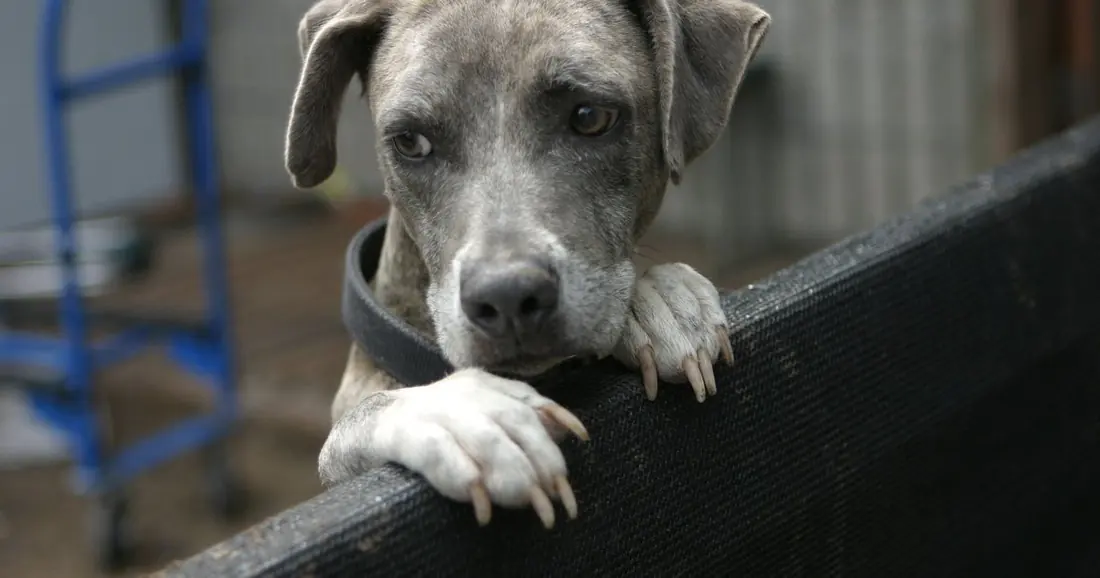
Why Do Dogs Whine? Read It by When It Happens
By Dog Translator · · 6 min read
A whine is a request. It is the sound dogs make when they want something to change: a door to open, a person to come back, a pain to stop. That is why the sound itself tells you very little and the situation tells you almost everything. Stop trying to decode the pitch. Look at where the dog is, what just happened and what it does next.
AKC groups the causes into six buckets: wanting something, excitement, anxiety, appeasement, pain and alerting you to something. Here is how they map onto the situations owners actually ask about.
| When it happens | Most likely cause | What to do |
|---|---|---|
| At the door or by the food bowl | Wants something | Meet the need, but only after a second of quiet |
| When you grab keys or a leash | Excitement | Wait for calm before you move on |
| When you come home | Excitement plus greeting | Greet calmly; it fades |
| When you leave | Anxiety about being alone | Build alone time gradually |
| During storms, fireworks, the vet | Fear | Comfort is fine; remove or reduce the trigger |
| After you scold it, ears back | Appeasement | Drop it and move on |
| Staring at you, nothing obvious missing | Learned attention whine | Ignore it, reward quiet |
| When lying down, getting up or touched | Pain | Vet |
| At night in a crate (puppy) | Isolation, needs a potty break | Take out once, keep it boring |
| At night, senior dog, new habit | Pain or cognitive change | Vet |
The four questions that sort it out
If the table does not settle it, run through these in order. The first yes is usually your answer.
- Is it new? A dog that suddenly whines a lot with no change in routine should see a vet before you try anything else. AKC says the same.
- Is the dog looking at something specific? The door, the bowl, a toy under the couch. That is a request. Check whether it is a real need.
- Is the body tense? Tucked tail, lip licking, yawning, pacing. That is stress, and the whine is a symptom of it, not the problem.
- Is it looking at you and nothing else? That is usually a learned whine, and you are the one paying for it.
Whining for attention: the one owners create
Most chronic whining in healthy adult dogs is learned. The dog whined once, someone looked, talked or handed over a treat, and the dog filed it away. After a few hundred repetitions you have a dog that whines at dinner, during calls and whenever you sit down.
The fix is the same one that works for attention barking. Withdraw completely while the dog whines: no eye contact, no talking, turn away. The second it is quiet, even for a breath, reward it. Then ask for something incompatible with whining, like going to a mat. Expect an extinction burst, a few days where it gets louder, because the dog is checking whether the old rule still holds. Give in once during that burst and you have taught it to whine longer.
Excitement and appeasement whines
Two kinds of whining need no fixing at all. The excitement whine comes before walks, car rides and greetings. The dog is wiggling, the tail is going wide and the whine rises in pitch as the good thing gets closer. If it bothers you, pause whatever you were doing until the dog is calmer, then carry on. It learns that calm makes things happen faster.
The appeasement whine comes with a lowered body, ears back, sometimes a rolled-over belly, often right after a raised voice or a tense moment. AKC describes it as a dog apologizing. The right response is to acknowledge it quietly and move on. Keep scolding and you get more appeasement, not better behavior.
Whining from anxiety
An anxious whine comes with an anxious body: low posture, ears back, a tail held low or tucked, panting when it is not hot. Thunderstorms, fireworks, car rides and the vet are the usual triggers. Comforting a frightened dog does not reinforce the fear; that idea is a myth that has stuck around too long. What you cannot do is fix a phobia with comfort alone. If it is severe, talk to your vet about it the way you would about any other health issue.
Whining when you leave is a separate case. If it stops within a few minutes and the dog settles, it is a protest. If it escalates into howling, scratching at the door or accidents, that is separation distress, and the howling guide explains how to check with a simple recording.
Whining from pain
Pain whines tend to show up at specific moments: getting up from a nap, climbing stairs, being picked up, or when you touch a certain spot. Older dogs with sore joints often groan or whine as they lie down. That pattern is different enough from a contented groan that we gave it its own guide. If the whine is tied to movement or touch, skip the training advice and see a vet.
Puppies whining at night
A new puppy whining in its crate the first few nights is normal. It has just been separated from its litter and its bladder is small. The approach that works best:
- •Put the crate near your bed for the first week or two so the puppy can hear and smell you.
- •Take the puppy out on a leash for one quick, boring potty break if it wakes up crying. No play, no talking.
- •Go back to bed. If it whines again right away, wait for a pause before you respond.
- •Move the crate gradually to where you want it once the puppy sleeps through.
Breeds that whine more
Vocal breeds whine more because they vocalize more overall. Huskies are famous for it: a Husky often whines, yodels and 'talks' as part of normal conversation, not distress. Toy breeds like the Pomeranian and Chihuahua are also quick to whine, partly because small dogs get picked up and fussed over when they make noise. A Golden Retriever is more likely to whine from excitement, often with a toy in its mouth. Breed tells you the baseline. A change from the baseline is what matters.
What not to do
- •Do not yell. To a dog, raised voices are attention and often excitement.
- •Do not use punishment collars for whining. You may suppress the sound and leave the cause untouched, which is how pain and anxiety get missed.
- •Do not give in halfway through a whining fit. That teaches persistence.
- •Do not assume. A whine is a symptom. Find the cause first.
For whining, barking and growling side by side, the dog to human translator guide covers the full set of everyday dog sounds.
Frequently asked questions
Why does my dog whine for no reason?
There is almost always a reason, it is just not obvious. Check whether the whine is new (see a vet), tied to movement or touch (pain), paired with tense body language (stress) or aimed only at you (a learned attention habit).
Should I ignore my dog's whining?
Ignore attention whining, yes, and reward quiet. Do not ignore whining that signals a real need like a potty break, or whining that is new, tied to pain or paired with signs of fear.
Why does my dog whine at night?
Puppies whine at night because they are alone and need potty breaks. In adult dogs, night whining can mean a need to go out, discomfort or, in seniors, pain or cognitive changes. A new night-time habit in an older dog is worth a vet visit.
Do dogs whine when they are happy?
Yes. Excitement whines are common at greetings and before walks. The body is loose and wiggly and the tail wags wide, which is how you tell them from anxious whines.