Why Does My Dog Sleep at My Feet? What Positions Mean
By Dog Translator · · 6 min read
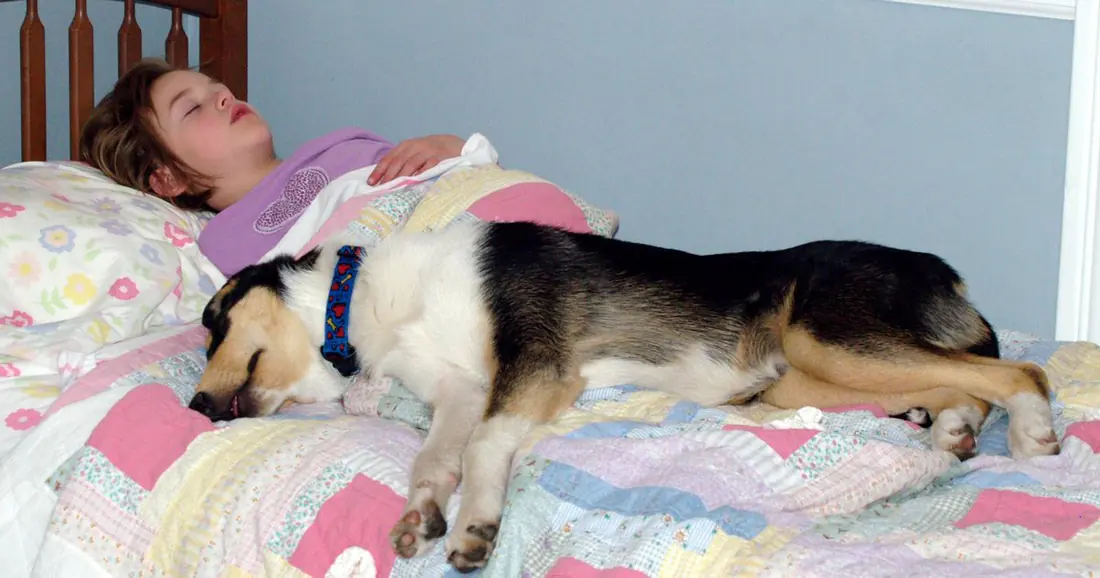
Dogs sleep at their owners' feet because it keeps them close without being in the way, it is often the coolest and least crowded part of the bed, and it lets them get up and move fast. That is the practical answer, and it fits what we know about dogs as social animals that rest near the people they are bonded to. Be wary of anyone who claims a precise personality reading from a sleeping position. Nobody has studied dog sleeping spots in that kind of detail. What you can read is closeness, temperature and how relaxed the dog is.
Where your dog sleeps, and the likely reasons
| Spot | Likely reasons | How sure can we be? |
|---|---|---|
| At your feet | Close but not crowded; cooler; easy to get up and follow you | Reasonable |
| Pressed against your back or legs | Contact and warmth; a relaxed, bonded dog | Reasonable |
| On your pillow or your side of the bed | Your scent, which dogs find rewarding | Good: scent research supports it |
| Back turned toward you | Comfort and trust; facing out toward the room | Speculative |
| Across the doorway or foot of the bed | Watching the exit, alert to noises | Speculative |
| In its own bed in your room | Wants to be near you with its own space | Reasonable |
| Moved away suddenly | Too hot, discomfort, or a change in health | Worth watching |
Why the feet specifically
The foot of the bed solves several problems for a dog at once. It is close to you, so the dog keeps contact with its person. It is usually less crowded and less hot than squeezing between pillows. And it is near the edge, so the dog can jump down when it hears something or when you get up. Dogs that like to keep track of their people, like many Border Collies and Australian Shepherds, often choose spots that let them follow you the second you move.
Your scent is part of it too. In an MRI study at Emory, the reward area of dogs' brains responded most strongly to the smell of a familiar person. The bed is the place that smells most like you, which also explains the dog that steals your spot the moment you get up.
Why some dogs sleep on you
Sleeping on your legs, your chest or curled into your side is the high-contact version. AKC's behaviorist links this kind of closeness to affection, warmth and security, the same reasons a dog sits on your feet during the day. Small, short-coated dogs like the Chihuahua seek body heat more, and fluffy breeds like the Shih Tzu often prefer to sleep against you rather than under the covers. For the daytime version of this, read why dogs sit on you.
Does a dog in the bed ruin your sleep?
Less than you might think, according to the best data available. In a 2017 study published in Mayo Clinic Proceedings, 40 healthy adults and their dogs wore activity trackers for seven nights. The people averaged 81% sleep efficiency, which is in the normal range. Their sleep efficiency was lower when the dog was on the bed than when it was simply in the room. The authors concluded that a dog in the bedroom may not be as disruptive as previously suspected, but the dog's position on or off the bed made a difference.
AKC reported on a separate Mayo Clinic survey of sleep patients: of those who let pets sleep with them, 41% said the pet either did not disrupt their sleep or helped it, citing warmth, contentment and companionship.
Bed or no bed: the trade-offs
| In favor | Against |
|---|---|
| Comfort and closeness for both of you | Fleas and ticks reach you more easily |
| Warmth on cold nights | Snoring and moving around can wake you |
| The dog alerts you when it needs to go out | Dirt, hair and dander, a problem with allergies |
| A calm routine for an anxious dog | Some dogs guard the bed or one partner |
AKC's suggestion is a good middle ground: make the bed 'invitation only' rather than an automatic right, and keep the rules consistent. Puppies should sleep in a crate until they are house-trained and big enough to get on and off the bed safely.
Circling, digging and flopping
Most dogs turn in a circle or scratch at the bedding before lying down. AKC links this to their wild ancestors patting down tall grass and brush to make a bed. It is normal, even on a smooth mattress. Excessive circling that never seems to end, or a dog that cannot get comfortable, can point to joint pain, especially in older dogs.
Twitching and noises in sleep
A sleeping dog that twitches, paddles its legs, whimpers or makes small barking sounds is usually in an active stage of sleep, the same way people move during dreams. Let it sleep. Do not wake a twitching dog suddenly; startled dogs can snap without meaning to. Call its name softly from a distance if you need to wake it. Movements that look violent, last for minutes, or leave the dog confused and wobbly after waking deserve a vet visit, because they can be seizures rather than dreams.
When the sleeping spot changes
A dog that always slept at your feet and suddenly sleeps alone in another room, or the reverse, is worth a second look. Common harmless reasons are temperature, a new mattress or a change in who is in the bed. Less harmless ones include joint pain that makes jumping onto the bed hard, an illness that makes the dog want to be left alone, or anxiety that makes it suddenly need constant contact. If the change comes with stiffness, restlessness at night, appetite changes or new clinginess during the day, see a vet.
Puppies and the bed
AKC's advice for puppies is to crate them at night until they are house-trained and mature enough to jump on and off the bed without getting hurt. A crate next to your bed gives the puppy the closeness it wants, keeps accidents off the mattress and makes the night-time potty break easy. The bed can come later, by invitation, once the puppy sleeps through and knows an 'off' cue.
If you want the dog off the bed
- Put a comfortable dog bed right next to yours, so the dog keeps closeness without the bed.
- Reward the dog for lying there at bedtime with a chew it only gets in that spot.
- If the dog jumps up, calmly guide it back down without a fuss. Consistency matters more than firmness.
- Move the dog bed farther away gradually, if you want it out of the room entirely.
If the dog panics when it cannot be next to you at night, treat that as a separation issue, not a manners issue. The checklist in why your dog follows you everywhere helps you tell the difference.
Frequently asked questions
Why does my dog sleep at my feet and not next to me?
The foot of the bed keeps the dog close while giving it space, it is often cooler, and it lets the dog get up quickly to follow you or check a noise.
Do dog sleeping positions have specific meanings?
Only loosely. You can read closeness, warmth and how relaxed the dog is, but detailed personality readings from sleeping positions are not backed by research.
Does sleeping with my dog hurt my sleep?
A 2017 Mayo Clinic study found people kept good sleep efficiency with a dog in the bedroom, but sleep efficiency was lower when the dog was on the bed rather than just in the room.
Why does my dog sleep on my side of the bed?
It smells like you. Brain imaging research found a familiar person's scent activates the reward area of a dog's brain more than other smells.
Sources
- Patel S.I. et al. (2017). The effect of dogs on human sleep in the home sleep environment. Mayo Clinic Proceedings 92, 1368-1372.
- American Kennel Club: Study, Sleeping With Pets May Be Beneficial
- American Kennel Club: Should My Dog Sleep in My Bed?
- American Kennel Club: Why Does My Dog Sit on My Feet?
- Berns G.S., Brooks A.M., Spivak M. (2015). Scent of the familiar: an fMRI study of canine brain responses to familiar and unfamiliar human and dog odors. Behavioural Processes 110, 37-46.