🐶 Pug Sounds
A flat-faced comedian of snorts, snuffles and snores.
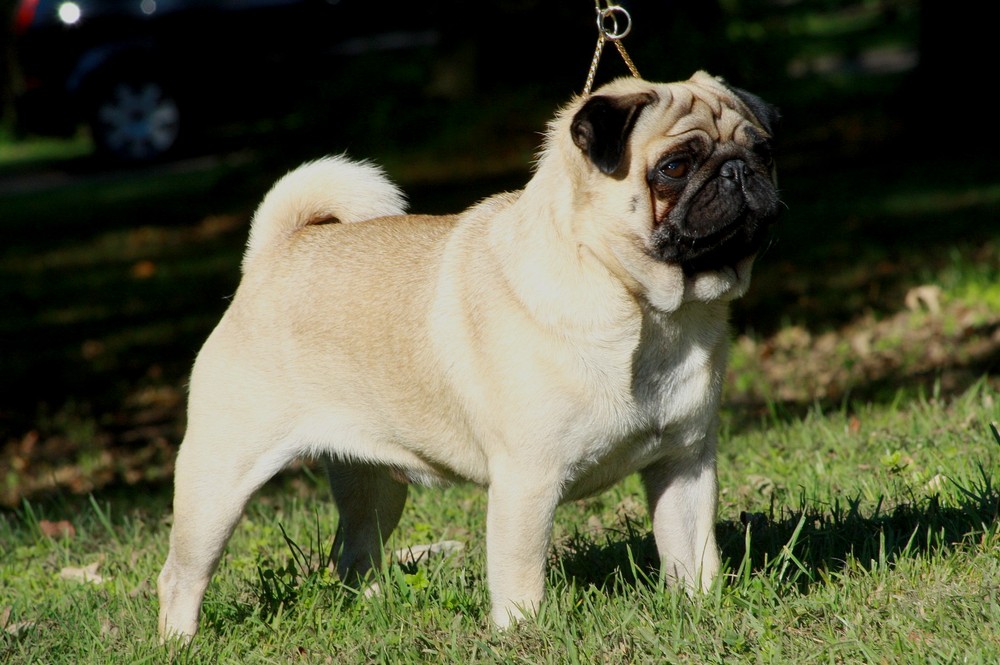
Pugs are one of the least 'barky' breeds but among the most entertaining to listen to. As a flat-faced (brachycephalic) companion dog bred purely for company, the Pug 'talks' through a constant soundtrack of snorts, grunts, snuffles and the famous Pug snore.
Pug sound chart
| Sound | What it means |
|---|---|
| Snorts and snuffles | Normal flat-faced airflow, common in play. |
| Loud snoring | Relaxed, happy sleep; normal for the breed. |
| Demand grunts + soft bark | Asking for food, attention or comfort. |
| Labored breathing at rest | Worth a vet check, not normal. |
Snorts and snuffles
Most Pug noise is air moving through a very short snout. Light snorting during play or excitement is normal; loud, labored breathing at rest is worth a vet check.
The Pug snore
Pugs are champion snorers, and it's usually a sign of a deeply relaxed, happy dog. Sudden changes in breathing sounds, though, are worth watching.
Demand grunts and barks
A stubborn, people-focused breed, Pugs grunt, 'talk' and give a soft bark to ask for food, attention or a spot on the couch.
Pug sounds: frequently asked questions
Do Pugs bark a lot?
No, Pugs are one of the quieter breeds. Most of their noise is snorts, grunts and snores, with only an occasional soft bark for attention.
Why does my Pug snort and grunt so much?
It's their brachycephalic (flat-faced) anatomy, air moving through a short snout. Light snorting is normal; loud or labored breathing at rest deserves a vet visit.
Is it normal for a Pug to snore so loudly?
Yes, Pugs are famous snorers, and it usually means a deeply relaxed dog. Watch for sudden changes in breathing sound, which can signal an airway problem.
When should I worry about my Pug's breathing?
Routine snorting and snoring are normal. Raspy, labored or distressed breathing at rest, or that worsens with mild exercise or heat, needs a vet, flat-faced breeds are prone to airway issues.