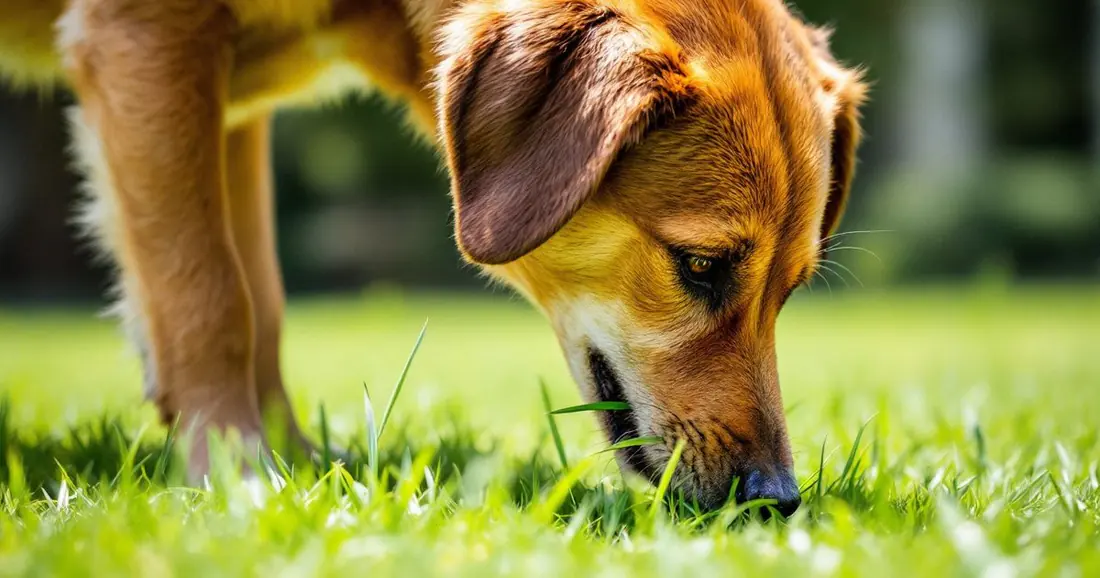
Why Does My Dog Eat Grass? What the Data Actually Shows
By Dog Translator · · 6 min read
Dogs eat grass because it is normal dog behavior. That is the conclusion of the best data available, a survey from the UC Davis School of Veterinary Medicine, and it is also what VCA and AKC tell owners. The popular idea that dogs eat grass to make themselves throw up when they feel sick does not hold up: most grass-eating dogs were not ill beforehand and did not vomit afterward. There are a few situations where grazing does matter, and they are easy to spot.
Myths versus what was measured
| Common belief | What the evidence says |
|---|---|
| Dogs eat grass to make themselves vomit | In the UC Davis study, only about 22% of dogs frequently vomited after eating grass |
| Dogs eat grass because they feel sick | Only about 9% frequently showed signs of illness before eating grass |
| Grass eating means a nutrient deficiency | Dogs on complete commercial diets still graze; deficiency is rare in well-fed dogs |
| Wild canids never eat plants | VCA notes stool samples show 11% to 47% of wolves eat grass |
| You should always stop it | VCA says occasional grazing that does not make the dog sick is not a worry |
The reasons that hold up
It is an old behavior
VCA points out that dogs' ancestors ate whole prey, including stomach contents full of plant material, and that wolves eat grass too. AKC makes the same argument: grass eating may simply be part of what dogs are, an echo of a scavenging past. The UC Davis researchers concluded that plant eating is a normal behavior of domestic dogs.
Fiber
Grass is roughage. Both VCA and AKC mention that some dogs may graze to get more fiber, which helps digestion and stool. A dog that seeks out grass every day may do better on a food with more fiber. That is a conversation for your vet, not a guess at the pet store.
Boredom and anxiety
VCA notes that grass eating often increases as owner contact time decreases. A dog left alone in the yard nibbles because there is nothing else to do, and anxious dogs may chew grass the way nervous people bite their nails. The fix is not a fence around the lawn. It is a puzzle feeder, a longer walk, or company.
Taste
Some dogs just like it. AKC notes that fresh, wet spring grass is especially popular. Plenty of dogs pick specific types of grass and ignore others, which looks a lot like preference.
An empty stomach
AKC's chief veterinary officer describes a specific pattern: a dog that frantically eats grass first thing in the morning and then vomits yellow foam. Yellow foam is bile, which usually means an empty stomach. In that case, a small meal first thing in the morning or a snack before bed often solves it. Ask your vet if this sounds like your dog.
When to worry
Grass itself is rarely the problem. These are the situations worth acting on:
- •Treated lawns. Herbicides and pesticides can be toxic. AKC and VCA both warn about this. Avoid freshly treated grass and parks you are unsure about.
- •Parasites. Grass can carry roundworm and hookworm eggs from other dogs' droppings. Keep parasite prevention up to date.
- •Toxic plants. A dog that grazes will also sample garden plants. Check what grows in your yard against the ASPCA's list of toxic and non-toxic plants.
- •Sudden urgency. A dog that suddenly gulps grass frantically, especially with lip licking, drooling or restlessness, may have stomach discomfort. VCA mentions conditions such as reflux, inflammatory bowel disease and pancreatitis.
- •Other symptoms. AKC lists vomiting, diarrhea, weight loss, reduced appetite, bloody stool, lethargy and lip licking as signs to get checked.
Do dogs vomit because of grass, or eat grass because they will vomit?
VCA calls this the chicken and egg problem. Some dogs eat grass urgently and throw up shortly afterward, and it looks like self-medication. But since most grass-eating dogs were fine beforehand and fine afterward, the more likely story is that grass, eaten fast and in long blades, sometimes irritates the stomach and comes back up. Either way, a dog that vomits once after grazing and then acts normal is not an emergency. A dog that vomits repeatedly, or seems unwell, needs a vet regardless of what it ate.
How to cut down on grazing
- Rule out the medical side first if the grazing is new, frantic or comes with other symptoms.
- Bring treats on walks. VCA suggests redirecting the dog as soon as it lowers its head to graze: change direction or ask for a sit, then reward.
- Teach 'leave it' at home with low-value items, then use it outside.
- Add enrichment. Food puzzles, sniff walks and short training sessions cut boredom grazing.
- Go out with your dog. VCA notes grazing increases when dogs spend more time alone.
- Consider a fiber discussion with your vet if your dog seeks out grass daily.
VCA adds a sensible caution: for a dog that grazes now and then without getting sick, trying hard to stop a natural behavior can do more harm than good. Manage the risks, like treated lawns and parasites, and let the dog be a dog.
Grazing versus gulping
How a dog eats grass tells you more than the fact that it eats grass. A relaxed dog that nibbles a few blades here and there during a walk, picks particular patches and carries on normally is grazing. A dog that suddenly rushes outside, gulps long blades as fast as it can, licks its lips and seems restless is gulping. VCA and AKC both treat the second pattern as a possible sign of stomach discomfort. Grazing needs management. Gulping deserves a closer look.
Puppies and grass
Puppies put everything in their mouths, and grass is no exception. Use the stage to teach 'leave it' and to reward your puppy for looking at you on walks. Be extra careful with treated lawns and with plants in your garden, since puppies are less selective about what they chew. A puppy that eats grass and then has diarrhea, vomiting or a swollen belly needs a vet.
One more practical point: if your dog vomits grass, look at what comes up and how the dog acts afterward. A dog that brings up a wad of grass and some foam, then wants to play, is very different from a dog that keeps retching, cannot keep water down or seems painful. The second dog needs a vet the same day.
Breeds and grazing
There is no good evidence that particular breeds eat more grass, but food-driven dogs tend to put more things in their mouths in general. Labradors, Golden Retrievers and Beagles are famous for it. If your dog also has a habit of eating less appealing things on walks, read why dogs eat poop, which has a lot in common with grazing and a few important differences. And if your dog rolls in the lawn instead of eating it, that is a different story, told in why dogs roll in grass.
Frequently asked questions
Is it normal for dogs to eat grass?
Yes. A UC Davis survey concluded that plant eating is a normal behavior of domestic dogs. Most grass-eating dogs were not sick beforehand and did not vomit afterward.
Do dogs eat grass when they are sick?
Usually not. Only about 9% of dogs in the UC Davis study frequently showed signs of illness before eating grass. Frantic grass eating with other symptoms is worth a vet visit.
Why does my dog eat grass and then throw up?
Some dogs vomit after eating grass quickly, but only about 22% did so frequently in the UC Davis study. Vomiting yellow foam in the morning can point to an empty stomach. Repeated vomiting needs a vet.
Should I stop my dog from eating grass?
Avoid treated lawns and keep parasite prevention current. Occasional grazing that does not make your dog sick is generally fine. Redirect with treats if you want to reduce it.