Why Does My Dog Shake? Shake-Off, Tremble or Emergency
By Dog Translator · · 6 min read
'My dog is shaking' covers five different things: the full-body shake after a bath, the same shake when the dog is dry, trembling or shivering, head shaking, and the uncontrolled shaking of a seizure or poisoning. They have different causes and very different urgency. Identify which one you are looking at first. The rest follows.
Triage: which shake is it?
| What you see | Most likely cause | Urgency |
|---|---|---|
| Full-body shake, dog is wet | Drying off | None |
| Full-body shake, dog is dry, after something tense | Shaking off stress | None |
| Trembling while waiting for a walk or a ball | Excitement | None |
| Trembling during storms, at the vet, with tucked tail | Fear or anxiety | Low, address the fear |
| Shivering outside or after a swim | Cold, especially small, thin or old dogs | Low, warm the dog |
| Shaking the head a lot, scratching an ear | Ear problem | Vet soon |
| Trembling with lethargy, hunching, not eating | Pain or nausea | Vet soon |
| Tremors in the back legs of an old dog | Age-related muscle loss | Mention to vet |
| Trembling, vomiting, after eating something | Possible poisoning | Emergency |
| Violent shaking, collapse, jerking, unresponsive | Possible seizure | Emergency |
The wet-dog shake
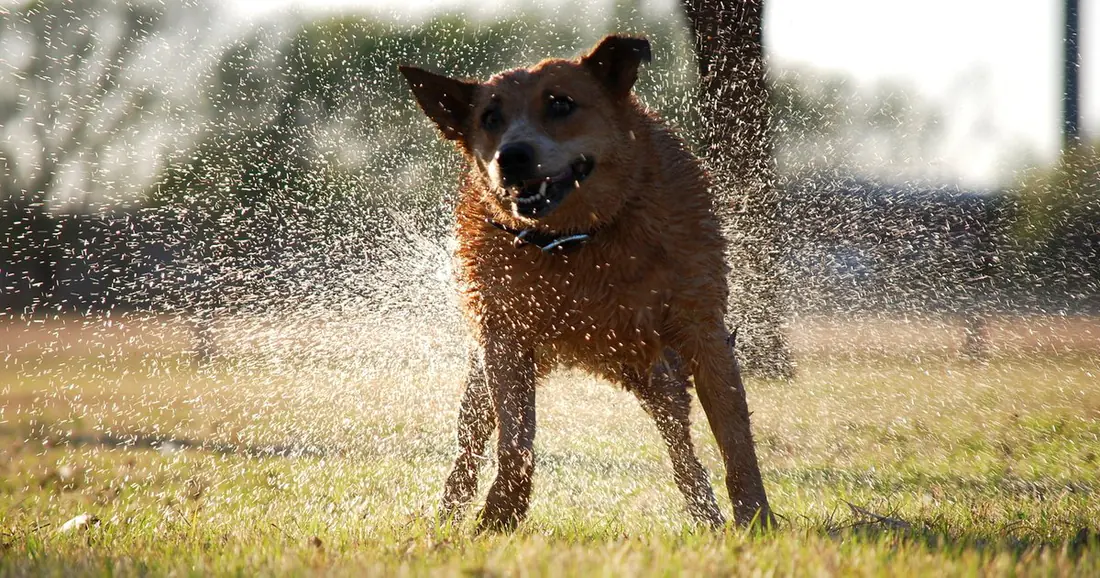
AKC notes that a wet dog can shake off about 70% of the water in its coat in around four seconds, which is better than most towels. A 2012 study in the Journal of the Royal Society Interface filmed 33 animals, including five dog breeds, with high-speed cameras. Smaller animals shake faster, larger ones slower, at frequencies tuned to their body size, and loose skin whipping around the body flings water off more effectively. Nothing to worry about here, beyond your bathroom walls.
The dry shake-off
When a dry dog does the same full-body shake for no obvious reason, it is often releasing tension. AKC calls shaking a classic sign of stress and gives examples: a dog shaking off after jumping down from the vet's exam table or after an encounter with a stranger. You will also see it after rough play, after a hug the dog tolerated, or after being told off. It works like a reset. If your dog shakes off right after an interaction, that interaction was more stressful than it looked, and other quiet signals like whale eye may have come just before it.
Trembling from excitement or fear
Excited trembling happens when a dog is held back from something it badly wants: the door before a walk, a ball in your hand, a person it loves coming up the path. The body is forward and alert, and it stops once the dog gets the thing.
Fearful trembling looks different. The body is low, the tail tucked, the ears back, and you may see panting, drooling or hiding. Thunderstorms, fireworks and vet visits are the usual triggers. Comforting a frightened dog does not make the fear worse. If it is severe or getting worse, talk to your vet, who can help with behavior plans and sometimes medication.
Cold, size and age
AKC notes that certain toy and small terrier breeds shiver more than others. A Chihuahua or a Yorkshire Terrier loses heat quickly, and a coat or a warm blanket fixes a lot of shivering. Senior dogs may lose some ability to regulate their temperature, so an old dog can shiver for a long time after a cold swim. AKC also mentions that seniors can develop tremors in the back legs as they lose muscle mass.
Toy breeds and young puppies are also the most prone to low blood sugar, which AKC's chief veterinary officer lists as a cause of shaking. Regular meals help prevent it. A tiny dog that is trembling, weak and wobbly needs a vet quickly.
Head shaking
A dog that shakes its head over and over, especially after a bath or a swim, may have an ear infection. AKC names breeds prone to ear problems, including Cocker Spaniels, Basset Hounds, Labrador Retrievers and Golden Retrievers. Look inside the ear for redness, dirt or a bad smell, and call your vet. Frequent hard head shaking can also burst a blood vessel in the ear flap, called an ear hematoma, which makes the flap swell up like a pillow. Dry your dog's ears after it has been in water.
Pain and nausea
AKC lists pain and nausea among the causes of shivering. VCA's list of pain signs includes changes in posture, withdrawal, reduced activity and restlessness. A dog that trembles while hunched, reluctant to move, uninterested in food or hiding needs a vet visit soon, not a wait-and-see.
Shaking in sleep
Twitching and small trembles during sleep are usually dreaming. A dog in active sleep may paddle its legs, twitch its lips and whimper. You can call its name softly; a dreaming dog wakes up and is normal right away. A seizure is different: the dog cannot be woken by its name, the movements are stronger and often rhythmic, it may drool or lose bladder control, and afterward it can be confused, wobbly or temporarily blind for a while. Film it if you can and call your vet.
Small dog shiver checklist
- •Is it cold or damp? Add a coat or a blanket and see if it stops.
- •Is the dog scared? Look for a tucked tail, ears back and hiding.
- •Has it eaten recently? Very small dogs and puppies can get low blood sugar when meals are skipped.
- •Is it acting sick? Lethargy, vomiting or hunching with the shivering means a vet visit.
The emergencies
- •Poisoning: chocolate, cigarette butts and products containing xylitol, such as sugar-free gum, can cause trembling, seizures, vomiting and diarrhea, according to AKC. Call your vet or a pet poison helpline right away.
- •Seizures: uncontrollable shaking for several minutes, jerking movements, collapse or brief loss of consciousness. Keep your hands away from the mouth, move objects away from the dog, time it, and call your vet.
- •Distemper: AKC notes this virus can cause shaking and trembling, mainly in unvaccinated dogs and puppies. It is contagious, so call ahead before bringing the dog in.
After the shake: what it tells you
A dry shake-off is useful information about the moment that came before it. If your dog shakes off every time a certain visitor leans over it, after every nail trim, or after the neighbor's dog barks through the fence, those moments are more stressful than they look. You do not need to stop the shake. You can change the moment: ask the visitor to crouch and let the dog approach, go slower with handling, block the fence line.
The quick decision
If the dog is wet, excited or just finished something stressful and goes back to normal within seconds, relax. If the shaking is new, lasts, or comes with other changes like lethargy, vomiting, hiding or ear scratching, call your vet. If the dog collapses, cannot respond or you suspect it ate something toxic, treat it as an emergency. For other everyday dog behaviors that look odd but are normal, see why dogs roll in grass.
Frequently asked questions
Why does my dog shake when it is not wet?
A dry full-body shake often releases tension after something stressful, like a vet exam or a tense encounter. AKC calls shaking a classic stress symptom in dogs.
Why is my dog trembling?
Common causes are excitement, fear, cold and pain. Small breeds shiver more easily. Trembling with lethargy, vomiting or hiding, or after eating something toxic, needs a vet.
Why does my dog keep shaking its head?
Frequent head shaking often points to an ear problem such as an infection, especially after swimming or a bath. Check the ears for redness or smell and call your vet.
When is dog shaking an emergency?
Shaking with collapse, jerking or unresponsiveness (possible seizure), or trembling with vomiting after eating something like chocolate or sugar-free gum (possible poisoning), needs immediate veterinary help.