Why Do Dogs Huff? Huffs, Snorts and Play Sneezes
By Dog Translator · · 6 min read
A huff is a short, sharp push of air out of the nose or mouth. Dogs do it during play, when something mildly annoys them, when they flop down to rest and when their nose is irritated. It sounds like one noise but it is really four or five different ones, and they mean different things. Here is the glossary first, then the contexts.
The nose and breath noise glossary
| Noise | How it sounds | Air goes | Usual meaning |
|---|---|---|---|
| Huff | One quick puff, often through the nose | Out | Play signal, mild frustration or settling |
| Play sneeze | A short, light sneeze, often repeated, mid-game | Out | 'This is play, I am friendly' |
| Play pant | A breathy 'hhuh-hhuh', like a laugh | Out | Excited, playful |
| Snort | Wet, rumbling nose noise | Out or in | Sniffing hard, or a flat-faced breed breathing |
| Reverse sneeze | Loud honking or gasping, in bursts | In | Throat or nose irritation |
| Sigh | A long, slow exhale | Out | Settling, contentment or mild boredom |
The direction of the air is the quickest test. Everything that pushes air out is communication or a reflex. The reverse sneeze, which pulls air in hard, is the only one on the list that worries owners, and usually it should not.
Huffing in play
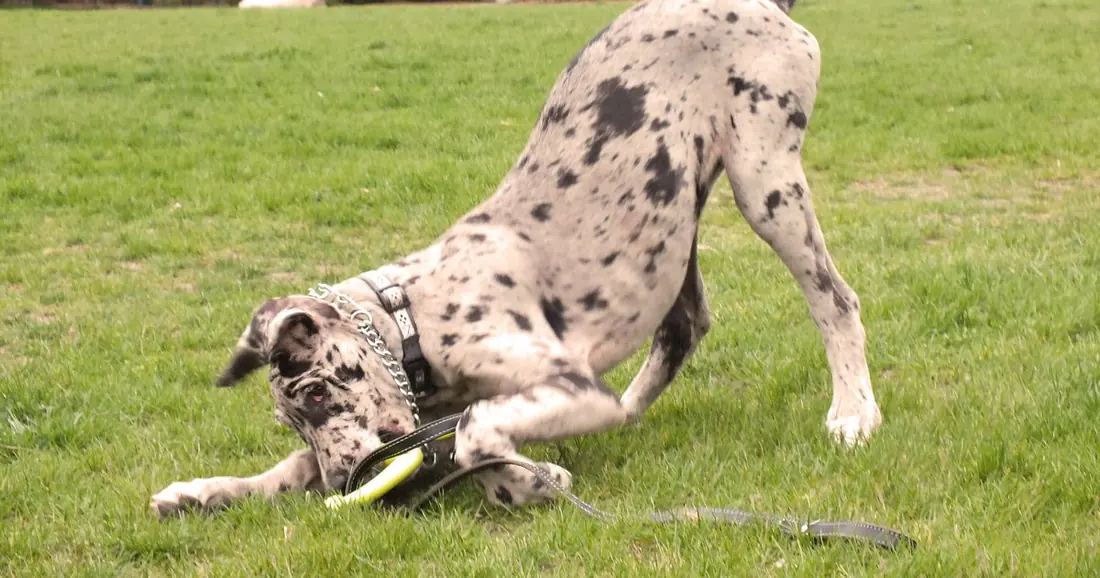
Watch two dogs wrestle and you will hear huffs and play sneezes constantly. AKC describes play sneezing as a way for dogs to show that their behavior is only playful. It works like a referee's whistle: rough play stays friendly because both dogs keep sending the signal. You often see it together with play bows, bouncy movement and dogs taking turns being on top.
A related sound is the play pant. In the early 2000s, animal behaviorist Patricia Simonet recorded the breathy, forced panting dogs make during play and called it dog laughter. When her team played the recording to shelter dogs, the dogs showed fewer stress behaviors and more social behaviors such as approaching the front of the kennel. It is a small study, presented at a conference rather than a major journal, so treat it as interesting rather than settled. It does match what owners see: that breathy huffing sound comes when dogs are having fun.
Huffing from mild annoyance
Many dogs huff when they do not get what they want. You stop the game, say 'not now', move them off the couch or make them wait for dinner. The dog lies down with a loud huff, sometimes with a side-eye. This is frustration at the mildest level, and it is fine. It is a dog voicing an opinion without escalating. If huffing turns into growling or stiffening, that is a different conversation, covered in why dogs growl.
Huffing when settling down
The huff a dog gives as it drops into its bed is often just a big exhale as the body relaxes. AKC's article on sighing, written with a board-certified veterinary behaviorist, describes the same thing: a sigh or huff with soft body language, loose ears and a relaxed face usually means the dog wants to rest. If it comes with a groan, read why dogs groan when you pet them.
Snorting in flat-faced breeds
Pugs, French Bulldogs, Bulldogs, Boxers and Shih Tzus snort, snuffle and snore more than other dogs because their airways are shorter and narrower. Some noise is part of the package. VCA describes brachycephalic airway syndrome, a set of airway problems common in these breeds, and noisy breathing is one of its signs. The line to watch: snorting that gets worse with exercise, heat or excitement, gagging, or a dog that tires very quickly. Those deserve a vet check, not a shrug.
Each of these breeds has its own sound profile on our breed pages: the Pug, French Bulldog, Bulldog, Boxer and Shih Tzu.
Reverse sneezing: scary, usually harmless
A reverse sneeze sounds like the dog is choking. It stands still, extends its neck and makes loud honking or gasping noises as it pulls air in through the nose. VCA explains that it is usually triggered by irritation of the nose, sinuses or back of the throat: excitement, pulling on the leash, dust, pollen or a strong smell. Episodes last a few seconds to about a minute, and VCA says the condition is not harmful in itself. Small breeds and flat-faced breeds are affected more often.
- •During an episode, stay calm and wait. Gently stroking the throat or briefly covering the nostrils so the dog swallows can help end it.
- •See a vet if episodes become frequent, last longer, or come with nasal discharge, nosebleeds, a reduced appetite or trouble breathing between episodes.
- •Film an episode. A short video is much easier for a vet to read than a description.
Huffing at strangers or other dogs
A huff directed at a person or dog the dog does not know is a different signal from a play huff. Watch what else is happening. A dog that huffs, looks away and sniffs the ground is usually trying to defuse the moment. A dog that huffs with a stiff body, closed mouth and hard stare is closer to a warning, and the next step may be a growl. Give it more space and let it approach in its own time.
Some dogs also huff through the nose when they catch an interesting or irritating smell. That is the nose clearing itself, not a message. If your dog huffs mostly with its nose to the ground, you can ignore it.
Huff, cough or gag?
Owners sometimes mix up a huff with a cough or a gag. They are different, and two of them deserve attention.
- •A huff is one short exhale, the dog carries on as normal and looks fine.
- •A cough is repeated, comes from the chest and may end with the dog swallowing or retching. A dry, honking cough after time around other dogs is a classic sign of kennel cough. Any cough that lasts more than a day or two is a vet visit.
- •A gag or retch, with the neck stretched and the mouth open, can mean something is stuck. If the dog cannot settle, drools heavily or tries to vomit with nothing coming up, treat it as urgent, especially in large deep-chested breeds.
When in doubt, film it. Vets see a lot of videos of dogs making odd noises, and it is the fastest way to get an answer.
So what is your dog saying?
Put the huff in context. Mid-game with a bouncy body, it is play. After you said no, it is a mild protest. As the dog lies down, it is relaxation. A burst of honking inhales is a reverse sneeze. That covers nearly every case. The rare exceptions are a huff that turns into a cough, repeated gagging or noisy breathing at rest, and the sections above tell you when those need a vet. For the bigger picture of what your dog's posture adds to its sounds, see the dog body language guide.
Frequently asked questions
Why does my dog huff at me?
Most often it is mild frustration, such as when you stop a game or tell the dog to wait. It can also be a play signal. Look at the body: loose and bouncy means play, a flop and a side-eye means protest.
Why do dogs sneeze when they play?
AKC describes play sneezing as a signal that the dog's behavior is only playful. It helps keep rough play friendly.
Is reverse sneezing dangerous?
VCA says reverse sneezing is usually harmless and episodes last from a few seconds to about a minute. See a vet if episodes become frequent or come with discharge, bleeding or breathing trouble.
Why does my dog huff when lying down?
Usually it is a relaxed exhale as the dog settles. Soft body language, loose ears and closed eyes confirm it. Groaning every time it lies down, especially in an older dog, can point to joint pain.
Sources
- American Kennel Club: Why Do Dogs Sneeze?
- American Kennel Club: Why Do Dogs Sigh?
- Simonet P., Versteeg D., Storie D. (2005). Dog laughter: recorded playback reduces stress related behavior in shelter dogs. Purdue Center for Animal Welfare Science summary.
- VCA Animal Hospitals: Reverse Sneeze in Dogs
- VCA Animal Hospitals: Brachycephalic Airway Syndrome in Dogs