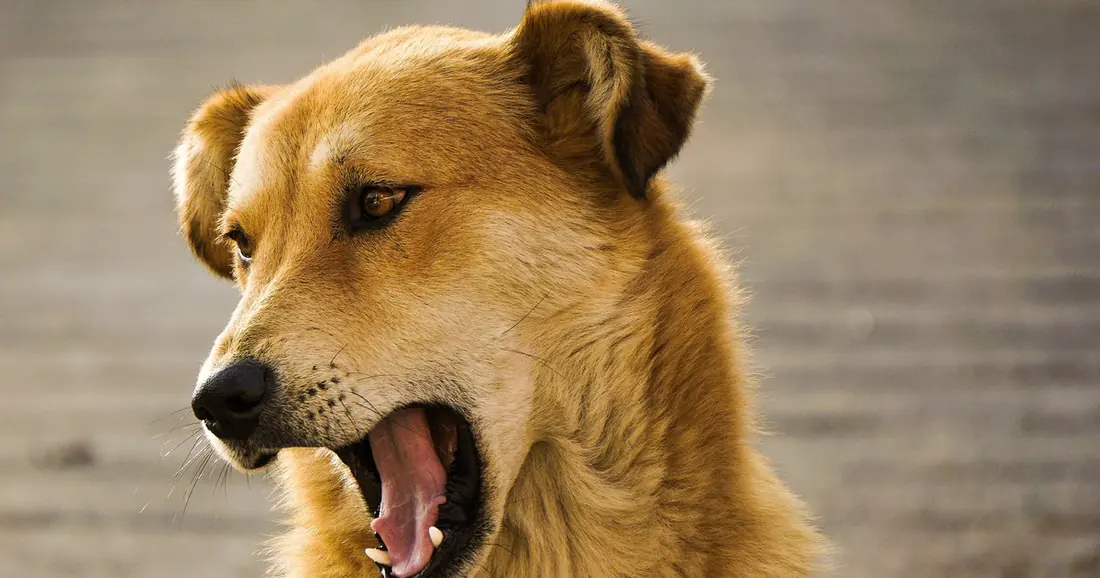
Why Do Dogs Yawn? Tired, Stressed or Catching Yours
By Dog Translator · · 6 min read
Dogs yawn for at least four reasons: they are sleepy, they are stressed, they are trying to calm a tense situation, or they just saw someone yawn. AKC is upfront that researchers still do not fully understand why dogs or people yawn. What owners can learn is how to tell the yawns apart, because a stress yawn is one of the most useful early signals a dog gives.
The four kinds of yawn
| Kind | When you see it | What else you see | What to do |
|---|---|---|---|
| Sleepy | Evening, after a walk, waking up | Stretching, heavy eyelids, relaxed body | Nothing |
| Stress | Vet visits, training pressure, being hugged, new people | Lip licking, whale eye, ears back, tense body | Reduce the pressure |
| Calming | Tense moments between dogs, raised voices | Looking away, slowing down, sniffing the ground | Let the dog defuse it |
| Contagious | Right after you or another dog yawns | Nothing unusual | Enjoy it |
Stress yawns
AKC notes that trainers and behaviorists teach owners to watch for excessive yawning as a sign of stress. Its examples: a dog yawning in an obedience class when it feels pressure from its owner, or yawning on a walk when you stop to chat with a neighbor it is unsure about. The key is context. A yawn when a stranger leans over your dog, at the vet, or while being hugged or handled is rarely about sleep.
Stress yawns usually come with other quiet signals: lip licking, turning the head away, whale eye, a lowered tail or a sudden stillness. AKC advises looking for those other signs before assuming anxiety. One yawn on its own tells you little. Three yawns plus lip licking during a nail trim tells you a lot.
Calming yawns
AKC describes yawning as a social signal used by both dogs and wild canids. When faced with an aggressive dog, another dog may yawn back, not as submission but as a sign it has no interest in conflict. This is often called a pacifying behavior. AKC adds that confident dogs and wolves sometimes yawn around fearful animals, which seems to signal calm and may help the other animal relax.
Contagious yawns: do dogs catch yours?
Probably, at least some dogs. In a 2008 study in Biology Letters, 21 of 29 dogs yawned after watching a person yawn, while none yawned when the person just opened and closed their mouth. A 2013 study in PLOS ONE found dogs yawned more after watching their owners yawn than after watching a stranger, and their heart rates did not change, which suggests the yawns were not a stress response. The researchers linked this to emotional closeness.
The evidence is not unanimous. AKC reports that Brian Hare at Duke found only about 5% of dogs yawned contagiously in data from an at-home test run by owners, though he notes the method may not have been ideal. The fair summary: contagious yawning in dogs has been shown in controlled studies, it seems stronger with familiar people, and not every dog does it.
Why does my dog yawn when I pet him?
Two common reasons. A dog that is relaxing into the petting may yawn as it winds down, especially near bedtime. A dog that is tolerating petting it does not enjoy may yawn as a stress signal, often while turning its head away or going still. The test is simple: stop petting for a few seconds. A dog that nudges you to continue was relaxing. A dog that moves away, shakes off or licks its lips was telling you it had had enough.
Why does my dog yawn so much?
- •It is tired or bored. Under-stimulated dogs yawn more during long quiet stretches.
- •It is often stressed. Look for a pattern: yawning in the car, with visitors, during training or when left alone.
- •It is warm. AKC mentions research suggesting yawning may help cool the brain, since yawning happens more in warm environments, though this is not settled.
- •It is excited and frustrated. Some dogs yawn while waiting for a walk or a ball, as a way of releasing tension.
- •Rarely, it is medical. Excessive yawning with other signs, like nausea, drooling or lethargy, is worth mentioning to a vet.
Squeaky yawns
Many dogs make a high-pitched squeak or whine at the end of a yawn. It is normal and does not change the meaning. Breeds with expressive voices, like the Siberian Husky, are especially known for 'talking' yawns.
Using yawns to help your dog
- Notice stress yawns during training, grooming and vet visits. When they appear, slow down, take a break or make the task easier.
- Use them as an early warning around children and visitors. A yawning, head-turning dog wants a little space.
- Do not punish or interrupt the yawn. It is the dog coping.
- Try yawning slowly yourself in calm moments. Some owners find it helps settle their dog; the research on contagious yawning makes that plausible, though it has not been tested as a calming technique.
Yawning at the vet
Vet clinics are full of stress yawns. If your dog yawns repeatedly in the waiting room or on the exam table, it is coping with a stressful place. Practical help: wait in the car until you are called, bring high-value treats, ask whether the exam can be done on the floor, and schedule short 'happy visits' where nothing unpleasant happens. Many clinics now support this approach.
Yawns compared with other mouth signals
| Signal | Usually means | Look for |
|---|---|---|
| Yawn | Sleepy, stressed, calming, contagious | Context and other signals |
| Lip or nose lick | Stress or appeasement, sometimes nausea | Raised voices, handling, car rides |
| Panting at rest | Stress, pain or illness | Cool room, no exercise |
| Closed, tight mouth | Tension, attention | Freezing, hard stare |
| Soft, open mouth | Relaxed | Loose body, soft eyes |
Yawning in puppies
Puppies sleep a lot and yawn a lot, mostly from tiredness. They also yawn when overwhelmed, such as during their first car rides, vet visits or meetings with new people. Watching for stress yawns early helps you pace a puppy's socialization: if the yawns, lip licks and head turns pile up, the experience is too much for now. End on an easy note and try again another day.
Breeds and yawning
Yawning is universal across breeds. Sensitive, handler-focused dogs like the Border Collie often show stress yawns during training, while small dogs like the Chihuahua may yawn when picked up or handled more than they like. Easygoing dogs like the Golden Retriever and Labrador are more likely to treat you to the sleepy and contagious kinds. If a yawn comes with heavy breathing, read why dogs pant as well.
The takeaway is not to read every yawn as stress. Most yawns are just yawns. The value is in noticing the ones that show up at the wrong moment, together with other quiet signals, and adjusting before your dog has to say it more loudly. That small habit makes training, grooming and vet visits easier for both of you.
Frequently asked questions
Does a dog yawning mean it is stressed?
Sometimes. Dogs yawn when tired, but also when stressed or trying to calm a tense situation. Look for other signals like lip licking, head turning or whale eye before concluding it is stress.
Do dogs catch human yawns?
Controlled studies say many do. In one study, 21 of 29 dogs yawned after watching a person yawn, and another found dogs yawned more after their owners yawned than after strangers did.
Why does my dog yawn when I pet him?
Either he is relaxing into it or he is mildly stressed by it. Pause the petting: if he asks for more, it was relaxation; if he moves away or licks his lips, he wanted a break.
Why does my dog yawn so much?
Common reasons are tiredness, boredom, recurring stress, warm conditions or frustration. Excessive yawning with other signs like drooling or lethargy is worth discussing with a vet.
Sources
- American Kennel Club: Why Do Dogs Yawn?
- American Kennel Club: Did Your Dog Just Yawn Because You Did?
- Joly-Mascheroni R.M., Senju A., Shepherd A.J. (2008). Dogs catch human yawns. Biology Letters 4, 446-448.
- Romero T., Konno A., Hasegawa T. (2013). Familiarity bias and physiological responses in contagious yawning by dogs support link to empathy. PLOS ONE 8, e71365.